Join the AI + Data Tour for hands-on training, real customer stories, and time with Domo product experts near you.
Register now
You ask your AI assistant for last quarter's sales in one region, and it gives a confident number. But then you open your BI team's dashboard, and the figure is different. Which one do you trust?
That gap sits at the center of a recent Domo livestream, and the answer came down to one idea: a shared semantic layer. His guest was Ben McClave, principal business intelligence analyst at Yum! Brands, joined me to share how his team is building better AI with one.
For context, Yum! Brands is the world's largest restaurant company, home to KFC, Taco Bell, and other familiar names. It runs data across 150 countries and tens of thousands of locations.
The framework Ben and his BI team built shows how to make AI and BI agree by governing context in one shared place. When definitions live in a semantic layer, the assistant's answer matches the dashboard.
In short, consistency at that scale comes from where your definitions live, not from a tidier dashboard. As Ben explained, his team keeps that work upstream, so every tool reads from one source.
If that's something you need, too, the five steps below turn that idea into a repeatable practice.
A single metric, say sales for a region, can mean several things once different teams define it in different places. When those definitions splinter across tools, an AI assistant and a dashboard can each be internally correct yet still disagree with each other. The first move is to settle what every metric means before it travels anywhere.
This is less about software and more about discipline. BI as a discipline turns raw data into answers people can act on. If you fix each answer's meaning once, every downstream tool inherits it instead of inventing its own.
Ben's team gathers data from markets and franchises, then runs it through pipelines that clean it and shape it into one global model. That model follows a star schema, a common way to organize data around the events a business cares about.
A star schema keeps three kinds of information in clear relationships. Picturing those pieces makes the structure easier to reuse:
Storing this model in a cloud data platform, in Yum's case Snowflake, keeps it in one governed place instead of scattered across reporting tools. Snowflake acts as the foundation, and the rest of the stack reads from it. The heavy engineering happens once, close to the data, where you can check it and trust it.
A semantic layer is a governed set of definitions and relationships that sits on top of your data. It tells every tool what each measure means. Ben's team pushes its calculations and relationships into Snowflake semantic views rather than rebuilding them in each tool.
The old habit worked differently, with teams rebuilding measures inside the BI tool. That created copies of logic that lived nowhere else. As Ben walked through it, one governed definition, reused everywhere, keeps every answer aligned.
So, when the AI and the reporting tool both draw from the same semantic views, they rest on the same facts. A question asked of the AI returns the same number shown on the dashboard.
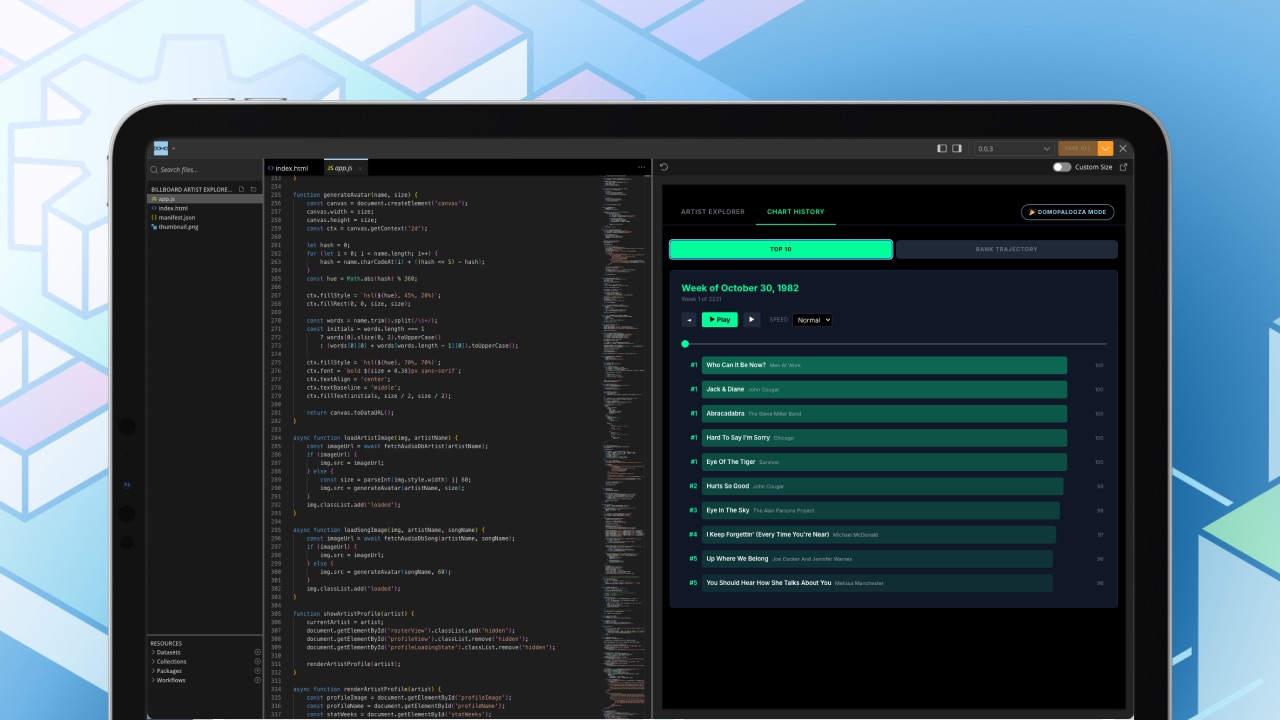
In the livestream, Ben shared a quick prototype dashboard as a React app, a common framework for building web interfaces. His team placed it in Domo's Pro Code Editor, a space for building custom apps with code.
When pointed straight at the semantic view, that prototype needed no separate dataset. It also didn't need a Beast Mode calculation, which is Domo's name for a custom metric built inside the tool.
Ben shared he's also eager for Domo's native Snowflake semantic model connection, going live later this year. It treats Snowflake as a partner foundation rather than a rival, and it makes governed AI answers available to any business user who asks. That's where Domo's value lands: turning AI into action on data you already govern.
A shared context layer works because people decide what goes into it. Humans set the definitions, the constraints, and the governance rules, and the AI executes within those boundaries. This human-in-the-loop control is the reason a business user can trust an AI answer in the first place.
Governance runs through every layer, from the data in Snowflake to the semantic views to the AI assistant's answer. Role-based access carries along that path, so each person sees only what they should. Ben's team is small, four or five people, yet it serves the whole company on that governed layer.
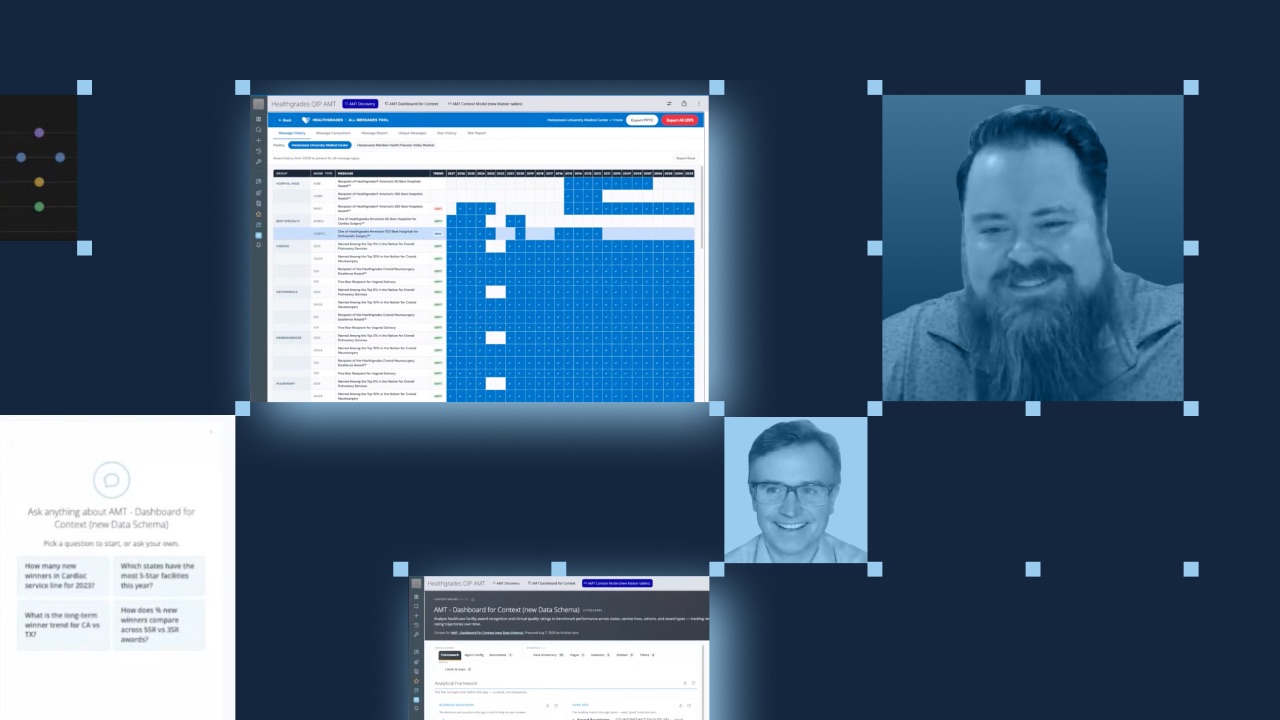
The framework above is one thread from a much wider conversation. In the full session, Ben walks through his AI-first workflow. He turns a one-hour meeting recording into a working dashboard the next day, compressing a quarter of work into a few weeks.
He also demos the "app that builds apps" he's piloting with Domo, a tool that guides people toward good design. And he makes the case that BI isn't dead but evolving, since someone still has to know which questions to ask.
Watch the full session to hear how his small team moves quickly without losing trust.