Flex Table Chart

Stakeholders want exact numbers for meetings and exports. And they also need to spot outliers at a glance. Flex Table charts solve both problems in a single view. This article explains what a Flex Table is, the data requirements for building one, when this chart type works (and when it falls short), and how to apply conditional formatting that actually communicates something useful.
Key takeaways for Flex Table charts
A Flex Table chart is a table visualization that combines exact numeric values with visual formatting like colors, icons, and data bars. You get the precision of a spreadsheet and the scannability of a dashboard in one view.
For analysts and BI specialists juggling a high volume of ad hoc reporting requests, this is also a consolidation play. One Flex Table can replace a stack of disconnected charts that fragment the story (and create a lot of maintenance).
When your stakeholders need to reference specific numbers in meetings while also spotting outliers at a glance, this chart type delivers. When they need to see trends over time or understand part-to-whole relationships, it falls short.
A sales team once built a Flex Table to track pipeline velocity over quarters. The tabular format showed the numbers clearly enough, but it completely obscured a three-quarter decline that a line chart would have made obvious. The vice president (VP) approved the forecast based on the final quarter's number alone. That's the kind of mistake this chart can enable if you're not careful about when to use it.
Here's what you need to know before choosing this visualization:
- Use this chart when: You need exact values alongside visual indicators and the output must export cleanly to PDF or Excel.
- Avoid this chart when: The question involves trends, rankings by a single metric, or composition analysis.
- Primary decision supported: Identifying which rows require action based on threshold violations.
- Most common misuse: Cramming too many columns into one view, creating a wall of numbers nobody actually reads.
- Best alternative: A heatmap for dense comparisons or a bar chart for single-metric ranking.
What a Flex Table chart is
Standard charts force you to choose between showing exact numbers or showing patterns. A Flex Table eliminates that choice.
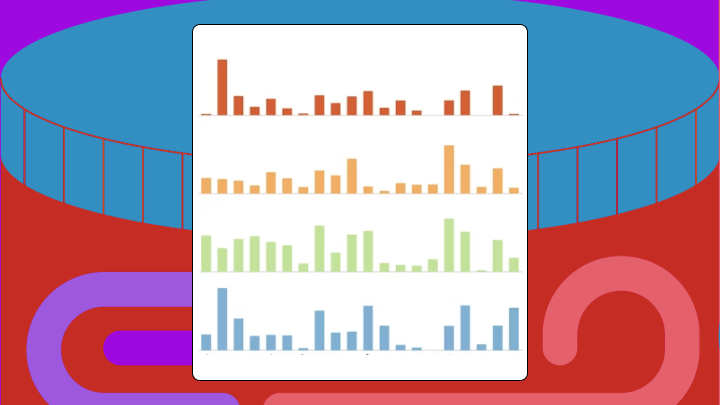
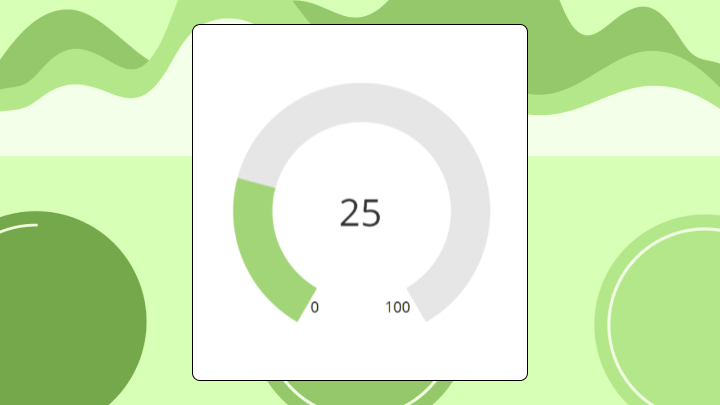
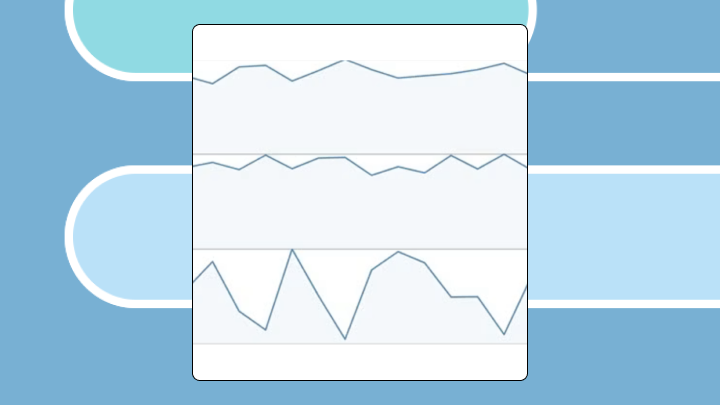
It renders data in rows and columns like any table, but each cell can carry additional meaning through background color, text color, icons, or inline data bars. Many teams also treat it like an operational scorecard by embedding mini-visuals (sparklines and progress bars, for example) directly in the table so people can scan status without opening three other charts.
The row and column position gives you the primary data point. The visual formatting gives you the secondary signal.
People searching for this term come from different contexts, so here's how the terminology breaks down:
This article focuses on Flex Table charts in BI platforms. If you're looking for the R package, the concepts around conditional formatting still apply, but the implementation differs entirely.
Data requirements for a Flex Table chart
Conditional formatting can appear to do nothing when numeric values are stored as text. Before you build anything, check your data shape.
Your dataset needs at least one dimension column (like region or product category) to define the rows. You also need at least one measure column with numeric values you want to display and format.
Optional fields make the chart more useful. A target column enables variance calculations. A status column lets you assign icons. A date column helps with filtering without requiring a pivot. If you want in-cell progress bars or sparklines, you also need a consistent numeric field (and a clearly defined time interval, like day, week, or month, for sparklines).
Minimum viable data shape? At least three rows. Fewer than that makes threshold-based formatting feel arbitrary. You also need at least two measure columns. Otherwise a simple metric card would work better.
Some conditions let the chart render but make it unreliable. More than 12 columns creates horizontal scrolling that hides critical metrics. Mixed data types in a single column (some text, some numeric) will break your color rules without any warning. This is one of the most common silent failures we see: A column looks numeric but contains a few text values buried in the data, and suddenly your red-yellow-green formatting applies to nothing.
If you support many teams, this is where a little discipline saves a lot of downstream work. According to Gartner, poor data quality costs organizations $12.9 million annually. That figure underscores why validating data types before building Flex Tables isn't just good practice; it's a cost-control measure. Data engineers and BI/IT managers usually get pulled into one-off tabular outputs when the data arrives half-formatted, or when every department wants its own special column logic. A clean, governed dataset (numeric measures as numeric, standardized fields for targets and status) lets the Flex Table handle the presentation layer instead of pushing formatting and layout into the pipeline.
If your data does not fit these requirements, choose something else. A bar chart works for a single measure across categories. A line chart handles time-series data. A heatmap covers dense numeric comparisons where exact values matter less.
When to use a Flex Table chart and when not to
Precision or patterns. That's the fundamental tradeoff.
This chart works when stakeholders will reference specific values in meetings or exports. It shines when you need to show variance or threshold violations inline with the metric itself. It's ideal when the output must survive export to PDF or PowerPoint with formatting intact.
This is why Flex Tables show up in sales, finance, operations, and marketing reviews. Line-of-business (LOB) managers want to see every key performance indicator (KPI), target, and variance in one place. Executives want one consistent table across departments so they're not reconciling five different formats before a Monday morning review.
Skip this format when the question is about trends. A Flex Table shows the numbers but hides the slope. Teams focus on the most recent period and miss momentum shifts entirely.
Don't use it when asking which category is largest. A bar chart answers that question in one glance. A Flex Table forces mental comparison across rows.
If you have more than 12 columns, horizontal scrolling will hide data. Viewers make decisions based on what they can see, not what exists off-screen.
And if your audience isn't familiar with conditional formatting conventions, red-yellow-green encoding assumes shared understanding. Without it, people ignore or misread the signals.
Viewers read tables top-to-bottom, left-to-right. They stop when they find something concerning. Metrics buried in column seven rarely get attention.
How to create a Flex Table chart
If conditional formatting isn't behaving the way you expect, start by validating data types in your dataset.
Required data preparation
Confirm all measure columns are numeric, not text. Remove or replace null values that create blank cells. If you're calculating variance, add that calculation to your data source rather than configuring it in the chart.
If your org is trying to standardize reporting, align on a small set of shared fields (targets, thresholds, status) at the dataset level. That way, analysts can build a governed report template once and teams can reuse it without reopening the data model every time someone asks for "the same table, but with one more column."
Validation check
After building, verify that totals match your source data. Check that conditional formatting applies to the correct columns. Sort by different columns to confirm row groupings don't break. Export to PDF and Excel to verify formatting survives.
If multiple departments will use the same view, also validate the display conventions (decimal places, currency symbols, and color logic) against a single standard so the table reads the same way everywhere.
Common build mistakes and fixes
Excel and Google Sheets can create similar tables with conditional formatting, but they lack interactive sorting, filtering, and drill-down. For one-time reports, spreadsheets work fine. For dashboards that refresh automatically, BI tools reduce the manual rework, and they keep access control and the source of truth in one place.
Steps to build in Domo
Use these steps to build a Flex Table in Domo:
- Navigate to your dataset and select Analyzer.
- Choose Flex Table from the chart type picker.
- Drag dimension fields to the Rows section.
- Drag measure fields to the Columns section.
- Open Chart Properties for formatting options.
- Under Conditional Formatting, define rules for color scales, icons, or data bars.
- Set thresholds based on your business logic.
- Preview and verify formatting applies correctly.
- Save and add to your dashboard.
Formatting and conditional rules for a Flex Table chart
Teams often apply color scales to every column. The result? A rainbow that communicates nothing.
Background color works for binary or three-band status indicators. Text color helps when background color would reduce contrast. Icons like arrows or checkmarks help when color alone isn't enough, or when your audience includes people with color vision deficiency. Data bars show relative magnitude within a column. If you need a quick "are we pacing to goal?" read, progress bars in a KPI column can do more work than another percentage field.
Here's a structure for threshold-based formatting:
If every cell gets formatted, nothing stands out. Limit formatting to columns that drive decisions.
Color logic can confuse international stakeholders. In some financial contexts, red indicates negative variance, which might actually be positive for an expense account. And honestly, that's the part most guides skip over. Label your color logic clearly. A legend or footnote takes five seconds to add and prevents a lot of misreading.
Accessibility matters here. Avoid red-green combinations without icons, since roughly eight percent of men have red-green color blindness. Ensure sufficient contrast between text and background. Low contrast affects 83.9 percent of websites according to WebAIM, which means your Flex Table formatting may be unreadable for people with visual impairments if you don't test it.
Settings and defaults for a Flex Table chart
A Flex Table that looks perfect on screen often exports to PDF with truncated columns and missing icons.
Match decimal precision to what your audience expects. Financial data usually needs two decimals. Operational metrics may need none.
Enable text wrapping for long category names. Disable it when you need compact rows.
Pagination improves load time for tables with many rows but hides data below the fold. Disable it if stakeholders need to see everything at once.
For PDF exports, verify page orientation and check that colors render correctly. Excel exports may not transfer formatting perfectly, so test before distributing. PowerPoint embeds may lose interactivity, so consider exporting as an image if formatting is critical.
Currency symbols, thousand separators, and date formats follow locale settings.
Limitations and alternatives to a Flex Table chart
If viewers need to see trends, slopes, or distributions, the tabular format obscures them. Flex Tables prioritize precision over pattern recognition.
Wide tables require horizontal scrolling, which hides data. If you have more than 12 columns, consider splitting into multiple tables.
Conditional formatting rules can conflict. If multiple rules apply to the same cell, the last rule wins, and that may not be what you intended. When building complex formatting logic, test each rule in isolation before combining them.
Mobile rendering can be inconsistent. With more than half of web traffic from mobile since 2019, tables designed for desktop often become unreadable on phones. You'll notice this becomes a real problem when executives try to check dashboards from their phones during travel. If a significant portion of your audience views dashboards on mobile, a Flex Table probably isn't the right choice.
Flex Table chart decisions and next steps
After seeing a Flex Table with variance indicators, a finance lead can immediately identify which cost centers need review without calculating differences manually.
Identifying threshold violations across many rows becomes straightforward. Exporting formatted data for presentations works without rebuilding in PowerPoint. Comparing multiple metrics per entity happens in a single view.
This is also where the "build once, answer many questions" idea pays off. Analysts can publish a reusable, governed Flex Table template, then LOB managers can tweak which columns they want for their weekly reviews without escalating every variation to the BI team or data engineering.
Spotting trends over time becomes harder because the tabular format hides slopes. Prioritizing action becomes riskier when every row shows a red indicator.
Teams often overcorrect by adding more columns because the data exists. More columns reduce focus. They also apply formatting to every measure, even though selective formatting works better.
This chart tempts teams to ask which category is growing fastest. A Flex Table shows current values but can't reliably answer questions about rate of change.
If you want to sanity-check your data shape, swap conditional formatting ideas, or see how other teams keep Flex Tables readable (without the "wall of numbers" effect), join the Domo community.