The spreadsheets exist. You're tracking game logs from every tournament, batting averages, pitch counts, strikeout rates. Maybe even swing metrics from that sensor you clipped on your player's bat. The data sits in folders and apps, waiting for something to happen. But when it comes time to plan tomorrow's practice, you're still guessing. Which players need extra reps? Who's quietly improving? Who might be one outing away from an overuse injury?
This tension sits at the heart of coaching: data exists, but translating it into a focused, time-boxed practice plan feels like a second job. Matthew Newsom, principal solution consultant at Domo and head coach of a youth travel baseball team, built an AI-assisted coaching platform to solve exactly this problem. In a recent Domo livestream, Matthew walked through how he turns raw game data into actionable practice plans, player development flags, and take-home drills for families.
What follows is a step-by-step guide drawn from Matthew's approach. Use it to build your own AI-assisted practice planning workflow from the data you already collect.
Start with the data you already have
The foundation of Matthew's system is data coaches already gather: game logs, tournament results, batting averages, on-base percentages, pitch counts, and metrics from tools like Blast Motion sensors. He didn't have to get any special new instrumentation.
As Matthew explained during the session, the key insight is that coaches are not inventing new data. "All this data is available; I didn't have to invent it. It's in spreadsheets. Putting it into a place where I can help is where it means the most."
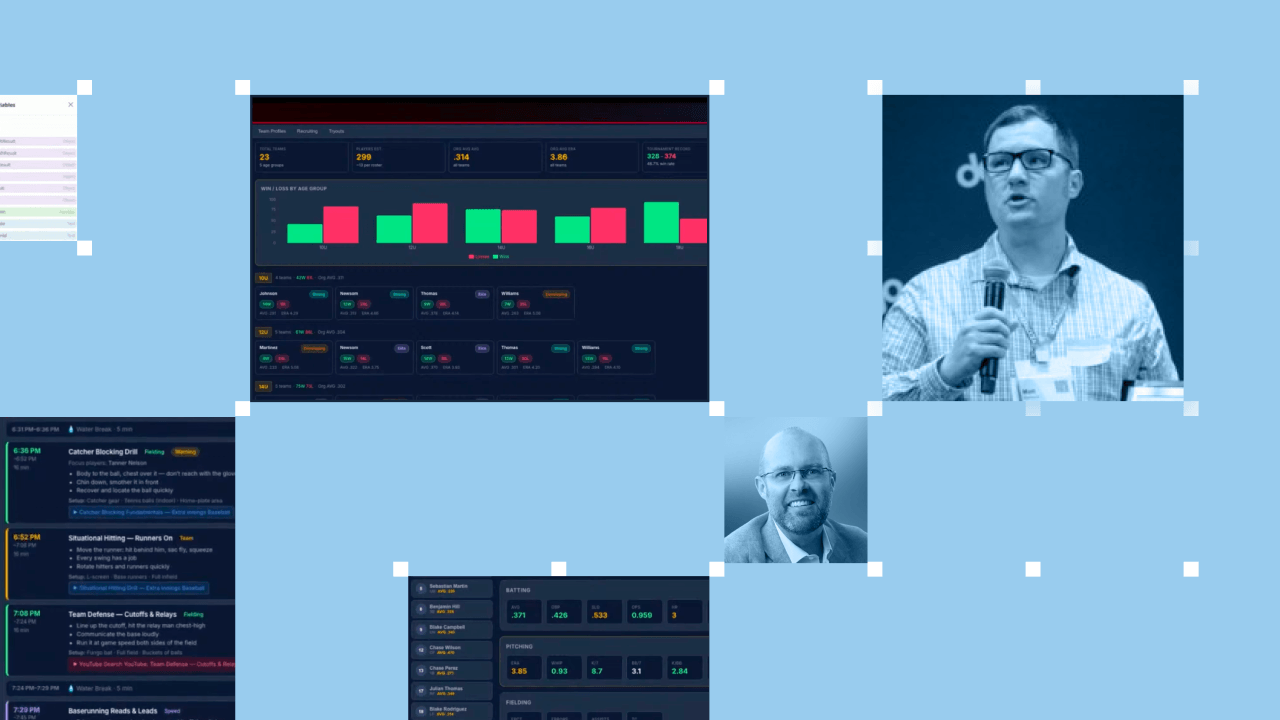
The first step is consolidating these sources into a single view. Think of it as creating a coaching command center where player profiles, trends, and performance snapshots live together instead of scattered across apps and folders.
Surface the trends that matter
Raw numbers tell you what happened, while trends tell you what's changing. Matthew's system highlights shifts in player performance over time, catching developments a busy coach might miss.
"Maybe their batting average improved 200 points over the last two weeks and I didn't catch it," Matthew noted. The same logic works in reverse. For instance, a dip in on-base percentage or a rising strikeout rate can show up before it becomes a full-blown slump.
The goal is pattern recognition. Look for climbing or falling metrics across a meaningful window (two to four weeks works well for youth baseball). Flag players who are trending in either direction so you can respond with coaching adjustments, not just react to outcomes.
Flag who needs attention and why
Once trends surface, the next step is generating player-specific development flags. Matthew's system produces a prioritized list of players alongside the metrics driving each flag.
These flags answer the question every coach asks before practice: who needs focused attention today, and on what skill? A player with declining contact rates gets flagged for hitting work. A pitcher whose arm has seen heavy tournament use gets flagged for rest or reduced workload.
Importantly, the system also flags positive developments, because recognizing a player who quietly improved rewards effort and reinforces good habits. Coaches can celebrate wins they might otherwise have missed in the noise of a busy season.
Turn flags into a time-boxed practice plan
Matthew demonstrated how his system generates a practice plan based on two inputs: the development priorities surfaced by the data and the time constraints of the session. A 90-minute weeknight practice looks different from a three-hour weekend session. A 5:30pm start time leaves less daylight than a 5:45pm start. The AI accounts for these constraints and sequences drills accordingly.
The output is a time-boxed schedule: warm-up, station rotations, position work, and team drills, each allocated based on where the data says the team needs improvement. Instead of planning practice from memory or habit, the coach works from a structured recommendation grounded in recent performance.
Attach the how-to so drills get done correctly
A practice plan only works if coaches and assistants know how to run each drill. Matthew's system attaches instructional resources directly to drill assignments.
"I give them links to YouTube videos so they can do it correctly. Not just 'do this' but 'here's how you do it correctly,'" Matthew explained.
This detail matters for youth programs where assistant coaches may have varying experience levels. Embedding tutorial videos or written instructions removes ambiguity and ensures drills are executed as intended.
Keep a human in the loop
Governance runs through the entire workflow. Matthew's platform requires coach approval before any take-home content reaches families. Parents receive insights about their own child only, scoped by role so no family sees another player's data.
This approach reflects a core principle: AI surfaces recommendations, but humans make the final call. The coach reviews every flag, every practice plan, and every player development summary before it goes anywhere. Automation handles the heavy lifting of data synthesis. The coach retains decision-making authority.
For youth sports, this matters beyond efficiency. Parents trust the program because they know a coach reviewed what they received. Players get coached by humans, not algorithms.
Catch the full livestream
Matthew's baseball coaching platform shows what happens when data meets structured AI assistance: fewer hours spent digging through spreadsheets, more time developing players. The same principles apply to any context where scattered data needs to become coordinated action.
The full livestream covers additional ground worth exploring, including how the same architecture maps to enterprise scenarios like restaurant operations at Chick-fil-A and how an organizational view lets directors see performance across multiple teams at once.
Watch the full session to see Matthew's platform in action and hear how he connects youth baseball coaching to broader business applications.