
Half of your reps' workweek might be disappearing into CRM archaeology, and that's exactly where building an AI-native revenue engine starts paying off.
Every go-to-market leader has heard the same refrain: "Our Salesforce is such a mess." Here's the thing: It always is. "CRMs are never clean," as Mike Christensen, senior director of operations and analytics at Domo, put it during a May 2026 livestream Unlocking the Intelligent Revenue Engine: Inside Domo's Sales Ops Agent. "If someone tells you their CRM is clean, that's one of those run-the-other-way [scenarios] because it's a lie."
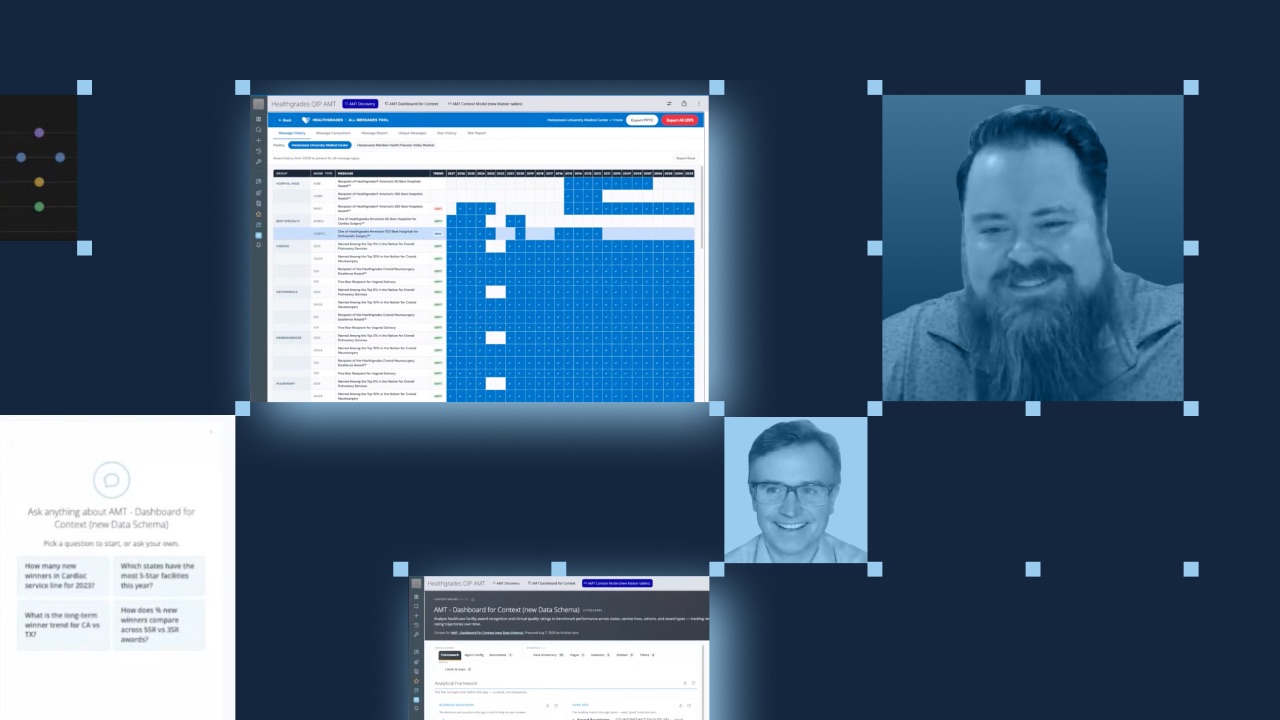
That messy CRM reality is precisely why building an AI-native revenue engine matters. The livestream walked through how agentic automation can eliminate the manual data-hunting that eats up rep capacity, shift forecasting from gut feelings to evidence, and give managers a scalable way to coach across their entire book of business.
Stop the data archaeology drain
AI-native revenue engines start by eliminating "data archaeology" that consumes rep capacity. The math is stark: Reps spend roughly 30 minutes per deal per week manually piecing together context across CRM records, call recordings, and email threads. Multiply that by 40 active deals, and you're looking at 20 hours a week (half of a rep's available time) lost to digging instead of selling.
"So we're saving on average about 30 minutes per deal when the rep is going through and doing all this follow-up," Mike said, linking automated drafting, call prep, and context retrieval to concrete time savings.
The fix isn't about cleaner data entry habits (good luck with that!). It's about centralizing deal context and surfacing next-best actions in one place so reps can act instead of search.
If you want to apply this thinking to your own revenue operations, consider these steps using a tool like Domo's Sales Ops Agent:
- Audit where reps actually spend time: Track how long it takes to prep for a call or draft a follow-up. The number will probably surprise you.
- Consolidate data sources into a single action surface: Pull CRM fields, call transcripts, and email threads into one view, whether through an agent, a dashboard, or a custom workflow.
- Surface next actions, not just data: The goal is less a prettier report, more telling reps exactly what to do next and why.
Automate core actions for 10x productivity
Automating core rep actions is positioned as a direct productivity multiplier. The Sales Ops Agent approach automates six primary actions: email drafting, call prep, deal coaching, pricing proposal creation, demo app creation, and account-wide search across sources.
"The overall goal here that we're trying to accomplish is to make every rep 10 times more productive," said Mike.
That's a shift in how reps interact with their pipeline. Instead of spending 30 minutes piecing together context before a call, the drafted agenda and relevant quotes are already waiting. Instead of manually building pricing proposals in a consumption model (notoriously complex), the system generates them automatically.
The difference is a five-minute interaction versus a 30-minute one—per deal, per week.
Here's how to start building this into your own workflows:
- Identify the six to eight actions reps repeat most often: Email drafts, call prep, and proposal generation are common starting points.
- Automate the prep, not just the output: Pre-populating context matters as much as generating the final deliverable.
- Measure time-to-first-action: Track how quickly reps move from landing on a deal to taking their next step. That's your leading indicator.
Forecast on evidence, not vibes
Forecast accuracy improves when the system enforces evidence-based forecasting rather than subjective stage updates. "If we can forecast on evidence and not vibes," shared Mike, "it improves our overall forecast accuracy, and we're starting to see that materialize."
The problem with traditional stage-based selling is that one rep's "stage three" isn't the same as another's. Some reps sandbag; others are overly optimistic. Managers end up forecasting based on narratives rather than signals.
The shift described in the livestream is milestone-based selling: Instead of letting reps manually select stages, the system determines whether a set of activities has been completed and qualifies the stage automatically.
This approach standardizes what a given stage means across your entire team. It also makes forecast reviews less dependent on rep storytelling and more grounded in observable evidence.
To apply milestone-based selling in your own environment, focus on these areas:
- Define milestones tied to completed activities: What specific actions (discovery call completed, pricing discussed, CFO engaged) qualify a deal for each stage?
- Build rule sets that auto-qualify stages: Use your CRM's automation capabilities to move deals based on activity completion, not manual updates.
- Surface risks and gaps automatically: Flag deals where expected milestones haven't been reached before the forecast call, not during it.
Key takeaways
The path to building an AI-native revenue engine isn't about replacing your CRM or ripping out existing systems. Rather, it's layering intelligence on top of what you already have, centralizing context, automating repetitive actions, and grounding forecasts in evidence rather than intuition.
Domo's Sales Ops Agent is ready to be customized to your team's specific needs. In the meantime, here's what you can act on now:
- Quantify data archaeology time: Use the 30 minutes per deal per week benchmark to estimate wasted capacity on your team.
- Shift to milestone-based stage qualification: Define activities that must be completed before a deal advances, and automate the stage updates.
- Treat your CRM as a system of record, not a workflow tool: Move day-to-day actions into an interface that writes back to the CRM, so reps stop navigating and start executing.
- Build manager views that surface prioritized risks: Give leaders visibility across their entire book without requiring them to dig through individual deals.
The opportunity is real, and the approach is practical. You don't need to wait for perfect data to start reclaiming rep capacity and improving forecast accuracy.
For the full walkthrough, including the architecture behind cost-aware AI pipelines and live demos of the Sales OpsAgent in action, watch the complete livestream from Domo: Unlocking the Intelligent Revenue Engine: Inside Domo's Sales Ops Agent.