AI Agentic Workflows: What They Are & Examples

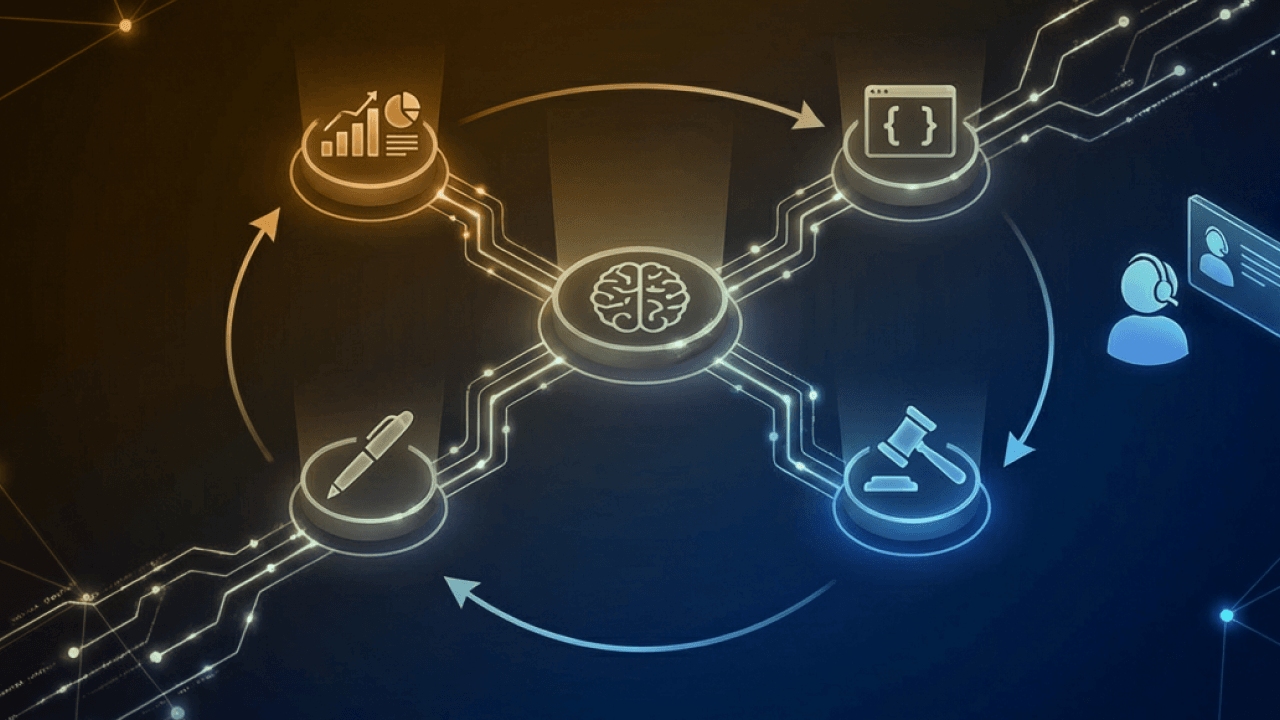
Most teams have gotten used to automation. It helps with the basics, like sending a confirmation email or flagging an overdue task, but it only goes so far. Automated systems follow rules, not reasoning. They still need human input every step of the way. Otherwise, when something unexpected happens, they stall.
That’s why more teams are moving beyond automation and embracing a new model: AI agentic workflows. These workflows are built around autonomous agents: artificial intelligence systems that can make decisions, adapt to changing conditions, and carry out complex tasks without constant human oversight.
But harnessing the full potential of agentic AI doesn’t just mean adding an agent to an old process. It means reimagining those workflows from the ground up—with agents at the core.
In this article, we’ll break down what AI agentic workflows are and how they’re different from traditional automation. We’ll explore how real teams are using them today, whether in HR, marketing, or IT. We’ll also look at the challenges to watch for, and what it means to build AI-first workflows in the “agentic era.”
What is an AI agentic workflow?
An AI agentic workflow is a process that’s powered by autonomous AI agents. They’re systems that can make decisions, take action, and adapt as conditions change, all without constant direction from a person.
In simpler terms: instead of following a rigid, step-by-step script, these workflows let intelligent agents manage tasks based on goals, priorities, and context. That means the work doesn’t stall when something unexpected happens. Agents can adjust and keep things moving.
What sets them apart?
- They’re adaptive. AI agents evaluate information in real time and shift their actions accordingly.
- They’re autonomous. Agents don’t wait for someone to tell them what to do next.
- They’re goal-driven. Each action supports an end objective, not just a list of tasks.
For example, an AI agentic workflow in HR might screen resumes, schedule interviews, and tailor its approach based on past hiring outcomes. In IT, an agent might identify a system issue, apply a fix, and notify the right team, all without waiting for a ticket to be assigned.
These agents are often built using rational AI models, which are designed to make the best possible decision based on available data, goals, and past results. At their core, AI agentic workflows are about giving intelligent systems more responsibility so people can spend less time managing the process and more time focusing on the impact.
AI agentic workflows vs traditional automation
Automation and agentic AI may sound similar, but they operate in fundamentally different ways. In short, automation helps things run, but agentic workflows help things evolve.
Traditional automation
Traditional automation is rule-based. It follows a fixed set of instructions and can only respond to the specific conditions it was programmed to handle. When something unexpected happens, such as a missing input or a process change, it usually breaks. These systems often rely on people to review, rerun, or rework tasks manually.
Agentic workflows
AI agentic workflows, on the other hand, are designed to be flexible and autonomous. Agents can interpret context, make decisions, and adjust their actions in real time. That makes these workflows far more resilient when variables change or new information becomes available.
A quick comparison of traditional and AI agentic workflows:
One of the biggest shifts is how these systems handle unpredictability. While automated processes can fail when faced with incomplete data or shifting priorities, agentic systems continue to function and improve. That means fewer dropped tasks, fewer manual fixes, and fewer errors.
Key components of AI agentic workflows
Building an agentic workflow isn’t just about plugging in an AI model. It requires a set of connected tools and systems working together to support decision-making, action, and feedback. Below are the key components that make it work.
AI agents
These are the core drivers of the workflow. Each agent is designed to pursue a specific outcome, such as responding to a support ticket, optimizing a campaign, or routing a task. Agents operate independently, but within the boundaries of the goal they’re given.
Large language models (LLMs) and prompts
LLMs give agents the ability to understand and respond to a wide range of inputs, from structured data to written content. Prompt engineering helps guide that behavior by clearly defining the task, parameters, and desired output.
Integrated services and infrastructure
Agents often rely on cloud-based platforms that provide shared data, tools, and services. These platforms offer scalability and flexibility, often through AI as a service (AIaaS) models that let teams get started quickly without building everything from scratch.
Data and feedback loops
Agentic systems improve with experience. Feedback—whether from people, performance data, or outcomes—helps agents adjust and make better decisions over time.
Security and governance
Autonomy requires oversight. Access controls, audit trails, and AI data governance practices help ensure agents act responsibly and in line with compliance requirements.
Benefits of AI agentic workflows
Agentic workflows don’t just save time; they give teams room to think strategically and act with more confidence. Here’s what that looks like in practice:
Fewer manual handoffs
Agents can manage complex tasks end-to-end, so work doesn’t get stuck waiting on approvals, reminders, or follow-ups.
More time for meaningful work
By handling repetitive or logic-based decisions, agents give people space to focus on strategy, creativity, and collaboration.
Informed decisions in less time
Because agents work in real time and learn from outcomes, they can recommend next steps based on what’s already worked. AI predictive analytics helps surface patterns that improve forecasting and guide data-driven decisions.
Scalable support
Whether it’s processing requests, analyzing data, or responding to messages, agents can scale up fast without more headcount or rework.
Data that leads to action
With the right feedback loop, agentic workflows help turn passive insights into actionable data, so teams can move faster without guessing what comes next.
How AI agentic workflows operate
At a high level, an AI agentic workflow mirrors how a person might approach a complex task: gather context, consider options, take action, and adjust based on results. The difference is that an AI agent can do all of that continuously and at scale.
Here’s what that process typically looks like:
1. Collect context
The agent pulls in data from different sources—documents, dashboards, conversations, and databases—to understand the current state and goal.
2. Evaluate and decide
It analyzes the information, weighs available options, and selects the next step based on its objective.
3. Take action
The AI agent carries out a task, such as sending an email, adjusting a campaign, or routing a request.
4. Monitor outcomes
It tracks what happened, measures results against expectations, and gathers feedback (either from systems or people).
5. Adapt in real time
Based on what it learns, the AI agent updates its approach—tweaking logic, timing, or priorities for next time.
These workflows are goal-oriented by design. Instead of following rigid rules, AI agents operate with purpose. That often includes planning for what’s next. For example, an agent might forecast potential outcomes and adjust its path accordingly.
AI planning and forecasting play a key role here, helping agents work toward the best possible result, not just the next available task. It’s less about following a script and more about navigating toward an outcome.
AI agentic workflow examples
Agentic workflows are already showing up across departments. Here’s how different teams are using AI agents to take on real work, in real time.
Human resources
An AI agent can review applications, rank candidates based on evolving criteria, and schedule interviews without requiring back-and-forth emails. It can even adjust filters based on feedback from past hiring rounds.
Finance
AI agents process invoices, flag discrepancies, and forecast cash flow based on spending patterns. When an issue pops up, the agent alerts the right person—no manual review required.
IT
AI agents monitor systems for irregular behavior, apply known fixes automatically, and route complex issues to the right support channel. They can also update status logs and notify impacted teams.
Marketing
An agent A/B tests subject lines in real time, reallocates budget based on performance, and creates summaries of campaign outcomes for weekly reporting.
Sales and customer support
AI agents pull up key customer data during a call, suggest personalized offers, and draft follow-up messages. They can also summarize support conversations and identify trends for product teams.
Supply chain and operations
Agents analyze shipping delays, reroute orders, and update inventory estimates based on demand shifts or vendor changes.
These examples reflect a shift from automation to intelligent decision-making—where agents can respond, iterate, and act alongside the team. AI business analytics plays a central role in enabling authentic workflows, helping teams put real-time insights to work across every function.
Challenges of AI agentic workflows
While AI agentic workflows offer flexibility and scale, getting them off the ground isn’t always simple. Teams often run into a few key challenges:
Legacy systems
Many existing tools and platforms weren’t built to support autonomous agents. Integrations can be slow or incomplete, especially when critical data is locked inside disconnected systems.
Data quality
Agents depend on clean, reliable data to make the right decisions. If the information is outdated, inconsistent, or incomplete, outcomes can quickly go off track.
Team adoption
Shifting from manual processes to agent-driven workflows requires more than new tech; it also takes buy-in. If teams don’t trust the system, they’re less likely to use it consistently or give helpful feedback.
Governance and risk
Giving agents autonomy introduces real questions about oversight. Who’s accountable when something goes wrong? How are decisions audited? Teams need to define who oversees AI agent actions, how decisions are tracked, and where boundaries are set. A strong AI data governance framework helps provide structure and transparency as agents take on more responsibility.
Agentic workflows aren’t one-size-fits-all, and the early stages often involve iteration. But with the right systems and support in place, these challenges become opportunities to build stronger, more adaptable processes.
The future of AI agentic workflows
Agentic AI isn’t just an upgrade; it marks a shift in how work gets done. As teams move from task automation to goal-oriented workflows, AI agents will no longer be add-ons to existing systems. Instead, they’ll become core contributors: navigating complex decisions, collaborating across tools, and improving performance over time.
McKinsey describes this shift as entering the agentic era, where teams operate in flat, flexible networks supported by intelligent systems. In their words, “how organizations are built and operate will evolve as much as the products or services they deliver.”
What do AI agentic workflows look like in practice?
- A team of marketers co-working with agents that handle testing, personalization, and reporting.
- An IT team that spends less time triaging and more time planning improvements.
- Agents working behind the scenes to support hiring, forecasting, or inventory management.
And it’s already happening. As enterprise AI becomes more accessible, teams of all sizes can build agentic workflows around their own goals. The future isn’t about replacing people with AI; it’s about redesigning work so people and agents can do more, together.
Redesigning workflows with AI agents
AI agentic workflows are already changing how teams operate today. By building processes around intelligent agents, teams can move quickly, stay focused on high-impact work, and respond in real time as things shift.
But getting started doesn’t mean reinventing everything at once. It starts with identifying where agents can make the most difference, then building from there.
At Domo, we help teams connect their data, surface real-time insights, and design workflows that adapt as they go. Whether you're exploring AI for the first time or ready to scale your agentic strategy, we can help you get there.
Ready to rethink how your team works? Let’s talk.
Frequently asked questions
What is an AI agentic workflow?
An AI agentic workflow is a process powered by autonomous AI agents that can make decisions, take action, and adapt to changing conditions without needing constant human direction. Unlike traditional automation that follows rigid rules, agentic workflows are goal-driven, allowing them to independently manage complex tasks from start to finish.
What is the main difference between an AI agentic workflow and traditional automation?
The key difference is how they handle unpredictability. Traditional automation is rule-based and follows a fixed script; it fails or stalls when unexpected situations arise. AI agentic workflows are designed to be flexible and autonomous. They use intelligent agents that can interpret context, make real-time decisions, and adapt their actions to keep the process moving forward even when conditions change.
What are the key benefits of implementing AI agentic workflows?
Implementing AI agentic workflows offers several significant benefits, including:
- Reduced Manual Handoffs: Agents can manage entire processes end-to-end, minimizing delays.
- Increased Focus on Strategic Work: By automating complex and repetitive decisions, they free up human teams for more creative and meaningful tasks.
- Faster, More Informed Decisions: Agents use real-time data and learn from past outcomes to recommend the best course of action.
- Greater Scalability: They can handle a growing volume of tasks, like processing requests or analyzing data, without needing more headcount.
How does an AI agentic workflow actually operate?
An AI agentic workflow typically follows a five-step, adaptive cycle:
- Collect Context: The agent gathers data from various sources like dashboards, databases, and documents.
- Evaluate and Decide: It analyzes the information and chooses the best next step to achieve its goal.
- Take Action: The agent executes a task, such as sending an alert, updating a system, or adjusting a campaign.
- Monitor Outcomes: It tracks the results of its action and gathers feedback.
- Adapt in Real Time: Based on what it learns, the agent adjusts its approach to improve future performance.
What are some real-world examples of AI agentic workflows?
Agentic workflows are being used across various business functions to automate complex processes. For example:
- In Human Resources, an agent can screen resumes, rank candidates based on evolving criteria, and schedule interviews.
- In Finance, an agent can process invoices, flag discrepancies, and forecast cash flow based on live spending patterns.
- In IT, an agent can monitor for system issues, automatically apply known fixes, and route complex problems to the correct support channel.

Domo transforms the way these companies manage business.


