Hai risparmiato centinaia di ore di processi manuali per la previsione del numero di visualizzazioni del gioco utilizzando il motore di flusso di dati automatizzato di Domo.
Guarda il video

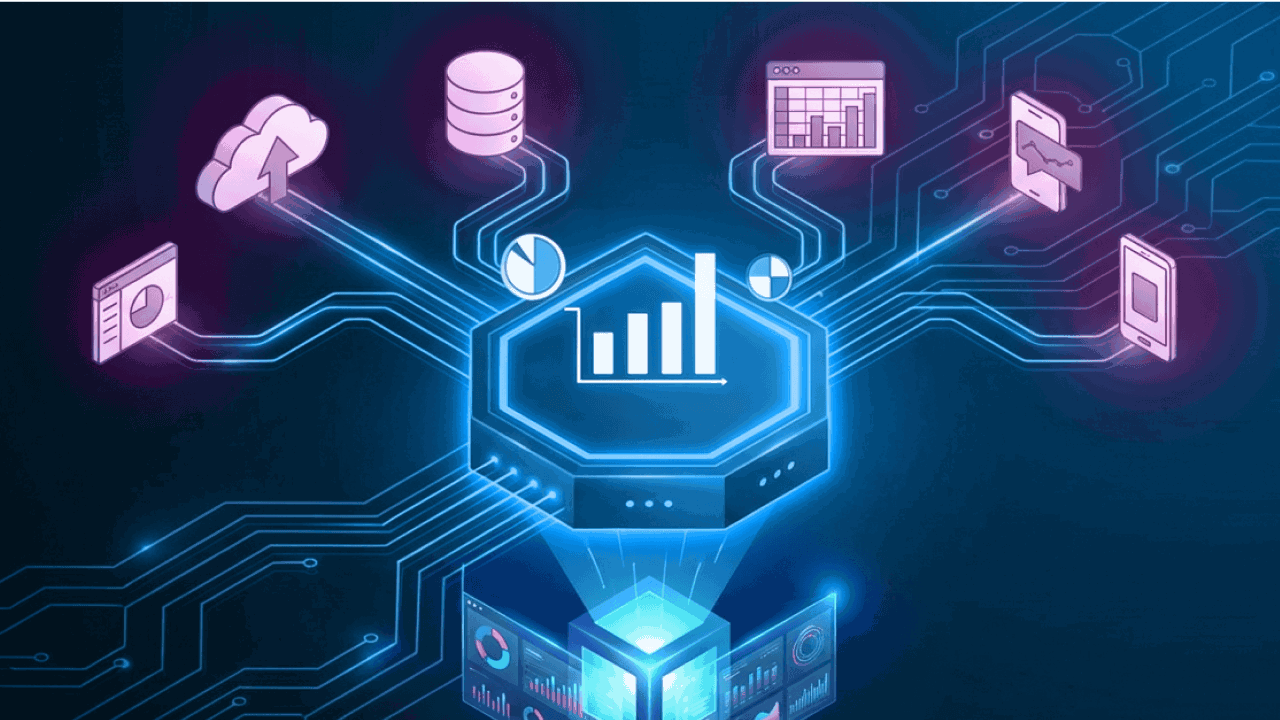
Data is coming from more places than ever—cloud applications, databases, operational systems, and third-party tools—all at different speeds and in different formats. For many organizations, this has created a familiar challenge: data scattered across silos, inconsistent reporting, and teams spending more time preparing data than using it.
That’s where data consolidation platforms come in. By unifying data from across the business into a single, trusted view, these platforms make it possible to analyze performance, power BI, and support real-time decision-making at scale. As we head into 2026, choosing the right data consolidation platform is no longer just a technical decision; it’s a strategic one.
In this blog, we’ll break down what data consolidation platforms are, the benefits they offer, what features to look for, and the best data consolidation platforms to consider in 2026 so you can find the solution that best fits your data strategy and business goals.
A data consolidation platform is a system that brings data from multiple sources into a single, unified view so it can be consistently accessed, analyzed, and governed across an organization. Instead of data being fragmented across databases, SaaS applications, spreadsheets, and cloud services, a data consolidation platform centralizes information and creates a shared foundation for decision-making.
These platforms work by enabling continuous data integration from a wide range of sources. Using prebuilt connectors, APIs, or streaming pipelines, they ingest data on a scheduled or real-time basis. As data is collected, the platform applies transformation and standardization logic—such as cleaning values, aligning schemas, and resolving duplicates—which is a core part of effective data management. Many platforms also apply governance rules, access controls, and quality checks to ensure data remains accurate and trustworthy as it scales.
Once data is consolidated and managed, it can be used across analytics and operational workflows. Most platforms are designed to support BI by making unified data easily available for dashboards, reports, and advanced analytics. With a single source of truth in place, teams spend less time preparing data and more time generating insights, enabling faster decisions and better alignment across the business.
As data volumes grow and systems multiply, simply collecting data isn’t enough. A data consolidation platform helps organizations turn scattered information into a reliable, usable asset. Below are the key benefits of consolidating data through a dedicated platform.
When data lives in silos, it’s difficult to see patterns or make confident decisions. A data consolidation platform unifies information from across the business, transforming raw inputs into actionable data that teams can trust. With a complete, consistent view of operations, leaders can identify trends, spot issues early, and act with clarity.
Many platforms support continuous ingestion, making real-time data available as soon as source systems update. This is especially valuable for operational dashboards, performance monitoring, and time-sensitive decision-making, where outdated information can lead to missed opportunities or delayed responses.
By centralizing data, consolidation platforms eliminate conflicting metrics and duplicated reports. Teams can rely on consistent definitions and calculations, resulting in more accurate data reporting across departments. This improves alignment and reduces time spent reconciling numbers.
A data consolidation platform streamlines data transformation by standardizing formats, cleaning records, and aligning schemas as data flows in. This reduces manual preparation work for analysts and ensures data is analytics-ready before it reaches dashboards or downstream tools.
Automated pipelines replace spreadsheets, one-off scripts, and manual uploads. This lowers maintenance overhead, reduces errors, and frees up data teams to focus on higher-value work instead of data wrangling.
As organizations add new tools, teams, and data sources, a data consolidation platform scales with them. It provides a durable foundation for analytics, BI, and future initiatives without requiring constant rework of data pipelines.
A data consolidation platform centralizes data controls, making it easier to enforce data governance standards, manage access, and maintain compliance. Instead of applying rules across multiple systems, teams can define permissions, validation rules, and audit trails in one place—reducing risk while ensuring the right people have access to the right data.
Consolidated, high-quality data is essential for advanced analytics, forecasting, and AI use cases. By unifying and standardizing data upfront, consolidation platforms make it easier to feed reliable data into predictive models and machine learning workflows, accelerating innovation without increasing complexity.
Forbes wrote that improved data consolidation platforms are changing the way companies approach AI initiatives. For too long, companies used fragmented SaaS stacks, which made it impossible to supply enough accurate data to AI engines. Disparate data sources and consolidation features are now being replaced by robust data consolidation platforms to feed AI systems.
Not all data consolidation platforms offer the same capabilities. The right solution should do more than simply collect data—it should make that data reliable, accessible, and easy to use as your organization grows. When evaluating platforms, look for the following key features.
A strong platform should connect easily to a wide range of data sources, including databases, cloud applications, and third-party tools. Prebuilt connectors and API-based ingestion reduce setup time and make it easier to add new sources as your data ecosystem evolves.
Whether data is physically centralized or virtualized, the platform must support secure, scalable data storage. Look for solutions that can handle growing volumes of structured and semi-structured data without performance degradation, while also supporting retention, archiving, and access control requirements.
Effective consolidation requires transforming data as it comes in. The platform should support cleansing, normalization, schema alignment, and enrichment so data is analytics-ready before it reaches dashboards or downstream systems.
Modern organizations often rely on distributed data environments rather than a single repository. Platforms that support a data fabric approach allow data to remain in place while still providing a unified, governed view across systems. This improves flexibility, reduces duplication, and enables faster access to data wherever it lives.
Look for features that help manage permissions, data quality rules, lineage, and auditing. Centralized governance ensures trust in the data while meeting compliance and security requirements.
A data consolidation platform should integrate seamlessly with BI and analytics tools, making it easy to deliver consistent metrics, dashboards, and insights across teams. Native analytics or tight BI integrations can significantly reduce time to insight.
Finally, the platform should provide visibility into pipeline health, performance, and data freshness. Built-in monitoring and alerts help teams quickly identify and resolve issues before they impact users or decision-making.
A strong data consolidation platform should support end-to-end data automation, from ingestion and transformation to delivery and refresh cycles. Automated scheduling, dependency management, and workflow orchestration reduce manual intervention and ensure data is consistently up to date. This not only improves reliability and scalability but also allows data teams to focus on higher-value analysis and optimization rather than maintaining pipelines.
In fact, CMSWire published a piece on how increasingly vital data orchestration is to data consolidation. While data consolidation is helpful, next-gen strategies mean that customer data platforms and customer intelligence systems need to be built on orchestration and context rather than consolidation alone.
As organizations deal with more data sources, higher volumes, and greater demand for real-time insights, data consolidation platforms have become essential. The tools below stand out in 2026 for their scalability, analytics capabilities, and ability to unify data across modern data stacks.
Domo is an end-to-end data consolidation and analytics platform that connects to hundreds of data sources and unifies them in a single cloud-based environment. It combines ingestion, transformation, governance, and visualization in one platform, reducing the need for multiple tools. Domo is especially strong at turning consolidated data into real-time dashboards and operational insights, making it well-suited for business users who need fast access to trusted data without heavy engineering effort.
Snowflake is a cloud-native data platform widely used for consolidating large volumes of structured and semi-structured data. It separates compute from storage, allowing teams to scale efficiently as data grows. Snowflake integrates with many ingestion and ETL tools and serves as a central repository for analytics, BI, and machine learning. Its performance, flexibility, and strong ecosystem make it a popular choice for modern data consolidation architectures.
Google BigQuery is a fully managed, serverless data warehouse designed for fast analytics at scale. It enables organizations to consolidate data from cloud applications, databases, and streaming sources with minimal infrastructure management. BigQuery’s strength lies in its speed and ability to query massive datasets using SQL, making it ideal for organizations already invested in the Google Cloud ecosystem and looking to centralize analytics workloads.
Amazon Redshift is a cloud data warehouse built for large-scale data consolidation and analytics within AWS. It supports both batch and streaming ingestion and integrates tightly with other AWS services. Redshift is well-suited for organizations that want to centralize data for reporting, dashboards, and advanced analytics while maintaining control over performance and cost through configurable compute resources.
Azure Synapse Analytics combines data warehousing, big data analytics, and integration in a single platform. It allows organizations to consolidate data from across Azure services, on-prem systems, and SaaS applications. Synapse supports both SQL-based analytics and Spark workloads, making it flexible for different use cases. It’s a strong option for enterprises standardized on Microsoft’s Azure ecosystem.
Databricks is a unified data and analytics platform built around Apache Spark and a lakehouse architecture. It enables organizations to consolidate data in data lakes while supporting BI, data science, and machine learning on top of the same data. Databricks is particularly strong for teams that want to combine large-scale data processing with advanced analytics and AI workloads in a single environment.
IBM Db2 is an enterprise-grade database and analytics platform designed for high performance and reliability. It supports data consolidation across transactional and analytical workloads and is commonly used in regulated or mission-critical environments. Db2 integrates with IBM’s broader data and AI ecosystem, making it a solid choice for organizations that prioritize stability, security, and enterprise governance.
Oracle offers a comprehensive suite of data platforms, including Oracle Autonomous Database and Oracle Data Warehouse, designed for large-scale data consolidation. Oracle’s solutions are known for performance, security, and deep enterprise features. They are often used by large organizations consolidating data across finance, operations, and core business systems, particularly in complex, mission-critical environments.
Teradata is a long-established leader in enterprise data warehousing and analytics. Its platform is built to handle massive data volumes and complex analytical workloads. Teradata excels in high-performance querying, workload management, and scalability, making it a strong choice for organizations with advanced analytics needs and large, centralized data environments.
SAP provides data consolidation capabilities through platforms like SAP HANA and SAP Datasphere. These tools are designed to unify data across SAP and non-SAP systems while supporting real-time analytics. SAP is especially valuable for organizations running core business processes on SAP applications and looking to consolidate operational and analytical data into a consistent, governed view.
As data ecosystems continue to grow in size and complexity, choosing the right data consolidation platform is critical to turning data into a competitive advantage. The most effective platforms don’t just centralize data—they make it easier to manage, analyze, and act on it across the business.
Domo stands out by combining data consolidation, transformation, governance, and analytics in a single cloud-based platform. With native connectivity to hundreds of data sources, automated pipelines, and real-time dashboards, Domo helps organizations unify their data and deliver insights faster without relying on a patchwork of tools. Whether you’re consolidating data for BI, operational reporting, or advanced analytics, Domo provides a flexible, scalable foundation that grows with your needs.
Ready to see how Domo can simplify data consolidation and accelerate better decisions? Explore how Domo helps teams connect, unify, and activate their data all in one platform.
Watch a demo to learn more about how we can help your business.
Domo transforms the way these companies manage business.