Join the AI + Data Tour for hands-on training, real customer stories, and time with Domo product experts near you.
Register now

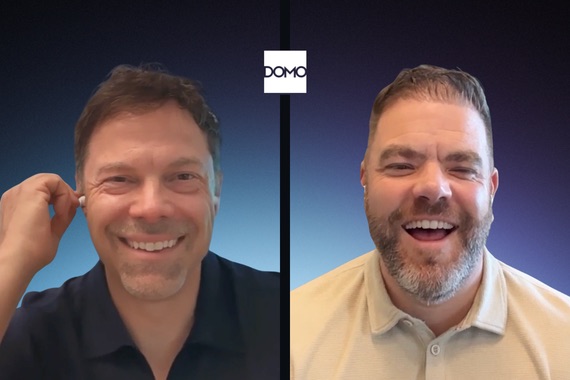
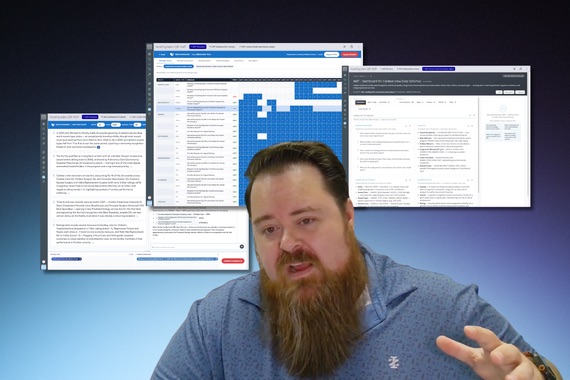
Mark: what up everybody good morning I am and for some of you good afternoon or good evening even getting close to evening for my good friend Chris we need coming to us from the great place of London England right now Chris is the head of EMEA professional services is whip smart and is real good we're just glad you're here Chris how are are you my friend?
Chris: Doing well thank you pleased to be here and yeah excited for our conversation today
Mark: and come on everyone I mean that accent Chris went from being really smart to being like 500 times smarter just because his accent is so good okay enough of me enough of me talking about how cool Chris is but he is cool I want to dig right in Chris and team have built some really cool solutions remember as we talk about Domo today there's really a few key pieces one we help you build your data foundation inside of your cloud data platform of choice whether that is snowflake native bricks Google, Dremio the list goes on and on and on from there is where it gets really fun for us so we're able to help you activate that data whether that's through building apps, agents, workflows or whatever it else you is it is that you need to be able to help your users be successful from there we help you actually distribute it so if that is an app on your CEO's phone if that's a website where your partners and customers can access it whatever it is we help you distribute it but the most important is it is all govern safe secure in a way that IT doesn't have to be worried about what is Chris building over there it's all audible we can see exactly what's happened so I'm excited to put that in the context and for Chris to be able to show you today what is it he's built why is he built it and really excited to see how is it that you're using AI to be able to make all things possible so Chris give us your thoughts what are you doing
Chris: absolutely so I think today you know we You see some great examples already from Cassidy showing how AI massively reduces development time and from Riley to talk about the headless authorization and changes to the way we might all be working in the future. I think today I want to hone in on what is our process but how do we bring that to life for people? So real life production scenarios. And I really enjoyed it quote from Ben Schein on this recently where he said, it's good to know the art of the possible but it's better to know the art of the possible and then make it possible. So I think Ben Schein for the win.
Mark: Ben Schein, this is always.
Chris: So yeah with that context in mind I think what I'm going to talk to today is how do we bring this life and I'm going to talk through a couple of examples that are focused on procurement which is a space I actually used to work in in a previous role and then yeah show some applications that they bring it's life a little bit.
Mark: Okay Chris. So knowing that not everybody who is watching this is a procurement person. Break it down. Tell me like I'm three what on earth does procurement do?
Chris: Yeah and I think that's part of the problem that the scope of the role has grown so massively over the years. So the start I get the very beginning you know it's all about purchasing goods right but for that is understanding the needs of the business capturing those requirements going out and finding suppliers are off of that running RFPs with them, analyzing the results, signing a contract, managing those contracts. So there's a huge amount that's in that role and I think it's just sort of grown over time.
Mark: Interesting. Okay walk me through the process. What is it you've done and why have you done it?
Chris: Yeah yeah so I think the first thing I'll start with you know capturing a requirement. So in my mind there's four things you need to create a successful agentic solution and build an application like this. I think the first is you know identifying the problem so it sounds simple but you know business have lots of problems so it's about writing those problems down, quantifying them and really finding those those quick wins so we know which problem to begin with. And then the second thing is really understanding that problem. So in the world of AI context is king so the more context we can have a very deep context understanding of the business, the logic, those edge cases that exist. We need to capture all of that so that whatever we build manages all of those different different edge cases that we've got. I think the third thing is being able to access and understand the data that we're going to use to help answer or solve that problem. And as you know that's the foundation of what Domo does and then the fourth is the technical capability to go and actually build a solution like that and I think what's interesting is with the advent of AI that technical barrier has dropped so much that previously those four areas will each handle by a different person but now all of those things can be handled by one person if they've got that's a main knowledge and they've got the willingness to lean in and use these tools. Who are Chris?
Mark: recapping. I was furiously taking notes over here just in case someone's like his mark playing solitaire again. No, I'm not. I'm taking notes. So, more things that we feel like any of our customers are anybody who's building agentic solutions, they've got to be able to ID the problem. They've got to be able, whoa, let's see. Holy case, excuse me, everyone. They've got to be able to understand the problem and get the context for the problem. They've got to then be able to access and understand all of that data to be able to solve the problem and then they have to have the technical capabilities to be able to go out and actually build the solution that takes care of all those things, right?
Chris: Exactly, okay. Exactly that. So, I think then, you know, recipe really becomes, yeah, it's understand that problem, give it the context away. I, to accelerate that development and then do that all on a platform that can handle security, the governance, the infrastructure underneath. And when you do that, you know, you mentioned Jake keeps with four and I think it's a great example, right? If someone who has that domain expertise, the willingness to learn those tools and use them and, you know, those are the people that are going to fly. And all I would say now is building fast now is easy, but I think, you know, building the right thing. That's what's becoming harder.
Mark: I love that. And it's interesting, it's just to, building fast is easy. I mean, you can go and do that with your vibe coding solution to your right now.
Chris: Exactly. That's not the key. The key is not, can I go and build fast? No, can you build things that are going to be impactful and most importantly governed and safe and secure where you can actually see, oh, shoot, are we sharing something that shouldn't be shared? Like that, that is a recipe for disaster. If you don't have a govern platform that is helping you to be able to actually build, activate, and distribute these solutions. Yeah, kind of very more. And, you know, we want to take that trouble away from people, right? We want to let those people who have that they may know that just focus on building useful tools and not have to worry about security, governance, authentication, scaling, just focus on building the solution that's going to solve the problem.
Mark: Love that. Okay, where do we go from here, Chris?
Chris: Perfect. So, I think now, maybe I'll talk a little bit around procurement specifically and give a kind of a bit of background on what we're going to talk about there. So, every company does procurement. So, whether they have a person with this specific title or not, you know, every single company is buying good buying services in order to run their business. But I think there's a huge gap at the minute between the data that exists in procurement and the decisions and actions that are then taken on top of it. And then I think from a technology standpoint, if I could sort of simplify the current say a play within the procurement technology landscape, I think at the minute there's probably three options. So, the first is you buy a big procurement pay platform. So, procurement page just means it's one platform that manages everything that we spoke about the start of finding the item purchasing it buying it. They can be great but they're often overkill for smaller teams. So they're expensive, there's too many modules, come to long implementation times, and they really, really need like 5% of that functionality. So it doesn't work for everyone. I think the second option then is point submissions, right? So rather than buying one we clap for my buy one tool that does contract management, my buy another tool that does spend analytics, I don't buy another tool that does RFP analysis, which works but the major problem there is you end up with this sussbral where I've now got five vendors, five contracts, five admins to manage all of these different things. So that doesn't work either. And then the five option I see right in the minute is Excel. People managing things in Excel, lots of companies do it. You know the real issue there is you know it's governance, it's scale and it's error-prote. So I think what I want to try and hopefully present today is you know there is a fourth option and you know I think that option is you know build the solution that you want and tailor it to exactly what you need it to do. So simplify this complex solution so you're not buying tools that have functionality you don't need but doing it in a half of my dough movie means that every app lives in one place and can connect. So we'll show some examples later of how the different apps can connect together. And I guess sort of use a procurement term this is a decision of build versus buy in software and I think for the last 20 years you know the default has just been buy and it's been SaaS and that's been the default decision for 99% of people but with the evolution of AI and the speed and lowest cost of development that's no longer a given you know that build option is there but you know as we've said to make that possible it has to be controlled has to be secured and has to be governed and that's what don't give you out of that box is that environment to build it without having to worry about those things.
Mark: I love it Chris this is exciting work clear where do we go?
Chris: Perfect all right well I think we're ready then to show some examples of what we built. Do we? If you don't mind bringing up bringing up the screen we're going to start by sharing an example of what we call the procurement intelligence app. So this is built for you know procurement teams or also those teams without procurement team right. A finance or operations team that know that they're spending money but have no visibility what they're spending on or if they're getting value from what they're spending on. So set the scene this app has two sides to it so an admin side which is as it sounds for an admin to us kind of a one-time setup I'm going to show a couple of steps in here that leverage AI just to show some examples and then the insights tab which is for their everyday user to as the sounds get the insights out of the data. So the first tab I'm going to show you is data cleaning so really common problem in procurement is that you get your data but all of your supplies is not necessarily called the same thing. When you're getting data from accounts, payable, and purchase orders, and invoices, and contracts, they're supply names are not aligned. And that sounds like a simple problem, but it comes a really big problem when you're trying to answer the question of, how much am I spending with Baker? How much am I spending with Hunter? So what this app does is look through all the data, pulls out all the suppliers, and automatically suggests a sort of a cleaning of that data for you. And this is where that human loop comes in, right? So I can choose whether I accept or decline this. I can look at my full list, and I can edit any supply and am I want. So we're giving people the chance to kind of edit or correct what the AI has done. The second part of this app is around defining a taxonomy. So a taxonomy is one of the most crucial things to have in procurement. And essentially, it is your grouping of what am I buying? The reason it's so important is because we need to create this taxonomy that's market-facing, so that when I want to go to market to buy widgets, that I have all my widgets together in one category, so I can take that go to market, and that will align to the market that can embed all those goods or services. So what we do is give the ability for these to generate that with AI. So it will last them to fill in some basic information about their company. So what industry and sub-industry are they in? What geography, how big are they? And it will combine that with looking at their actual spend data. So looking at the PO description in voice descriptions in order to generate a taxonomy that is specific to them. And again, is editable. So the results will be shown here. We go down to three levels, and the user has the ability to come in and edit at change any of this around. Once this is complete, behind the scenes, that's where we kick off our first full agents that are running. So it's going to do two things. One, it's going to then go and take our spend data. And every single line in our spend data, it's going to go and categorize that against the taxonomy that we've just generated. And once that's complete, it's then going to go and look at each of those categories to provide an overall summary of what's happening in that category. And then some savings opportunities within there. And that's what I'll show a little bit later on. Very cool. So now we've covered the adeninside. We'll take a look at the insight side of this. So the first tab is a spend overview. So this is a more standard dashboard, I can feel. It's spend analytics. I think what's quite nice about this is it gives us the ability to create visualizations that, again, is specific to procurement. So the sprint you visual here is, again, really common in procurement space. And allows you to see really quickly, what are all my different categories? What's my total spend in that category? How many suppliers do I have in there? So we can get that kind of overall view of the spend. But I think where the real magic starts to happen. when we then start to look at the category overview. So this page gives me a complete overview of every of my level two categories that they're in the spend and also allows us to automatically filter for categories that we see opportunities or risks. So an opportunity might be that I have a really long tail of suppliers in their given category and I've got an opportunity to consolidate that and you know get better pricing through consolidating that volume or a risk might be that you know I've got a category that only has a single supplier. So if anything goes wrong in my supply chain and I think we know a lot of things are happening in the world right now that can disrupt supply chains pretty quickly. So I need to do something about that and have a plan in place either way. So if we jump into a specific category what we'll see is we get a more detailed breakdown of you know exactly what's happening in this category. So we get specific stats, total number of suppliers, we see how concentrated our spend is with our top suppliers. We can see our kind of our list of top suppliers and how many of our different sites are they serving and then this is where we also start to see those AI insights being brought up. So the first is what we're seeing so we get a really easy thing to overview of that category. So for someone who's not familiar with what this category is, what it's for we can get a quick view of that and I think really the really nice bit here is the savings plays that generates. So for each category we're going to generate between three and four different savings place. So this is the AI looking at the specific spend of our company, looking all the options and suggesting to us actions that we can take to go and reduce our spend. And this is broken down into what is the opportunity why would we suggest this? So backed up by evidence from your specific data to explain why we're suggesting this. And what is the impact of this could be? And when we talk about human in the loop, I guess this is one of the first places again that we allow the user to come and you know accept or reject these these category plays. So we mentioned that the start that you know context is keen and as much as we try to capture all that context you know AI might suggest you know consolidating spend that sits with one of us pliers but you know our category manager knows that actually that that specific part is a really specialist part that's been with that supply for three years and it's going to cost hundreds of thousands to move it. The category manager knows that but the AI doesn't. So we give the user the ability to you know accept or reject the ones that make sense for them.
Mark: Chris, what walk us through from a procurement perspective I mean if you're a small business this isn't as big of a deal probably. But I mean any even you know five 10, 20, 50, 100, 500 billion dollar company has 10, 20, 100, thousands of different contracts like this right?
Chris: Yeah exactly and I think You know, even smaller organizations, I would say, you know, this is, this is still important. It's smaller organizations. That's typically where they don't have a procurement team. Right? So they will have never have seen a view of their spend like this. Each department head will know who their suppliers are and who they keep supplies up, and no one's ever seen this complete global view of this event. But you're right, you know, big suppliers equally become so important. Their spend is so big. Each category has, you know, kind of hundreds of suppliers, hundreds of contracts. So I think in both scenarios, this view becomes really important.
Mark: Cool. Okay. Where do we go from here?
Chris: Perfect. Buying apart of this one, we then provide this kind of overview, overview page as well. So as a procurement manager or as a finance manager, I can come in and see, you know, what are all those savings plays that we've accepted and that are in the works? So we can come in here and what's really nice is we can, you know, again, using Domo's foundational tools of analyzing data, we can come in and sort of track live, like, how is this initially going? So we can see a snapshot of the data, what the data look like before we accepted this strategy? And, you know, what's our data currently looking like now? So now we're, you know, 200 days past accept a bit. And again, we can have an AI support us here and producing an analysis of that to let us know if it looks like we're on track or if we're with a hint.
Mark: Chris, there has to be a pretty enormous savings, time savings alone, not set aside the monetary piece, which is, which could be very significant, just time savings has to be pretty significant, right?
Chris: Huge. Yeah, I'm talking from experience here. This, this process that I've just walked you through in this application, this used to take us two to three months to get all that data, to manually clean it, to manually categorize it, to look at each category and, you know, create the suggested saving strategies, you know, this took three months. This is consolidated down to one to two weeks. And that, that one to two weeks is including, you know, getting the data cleaning and running it through this. So it's a huge huge time saving.
Mark: That's amazing. Cool. What next, my friend?
Chris: Perfect. So I think what we'll do now is shift over and look at another solution that we've been built around contract management this time. Love it. So I mentioned the start, you know, one of the benefits of kind of building these solutions in Domo is this ability to, how is everything in one place? So, you know, my spent intelligence app is in Domo, my contract management is in Domo. And what that means as well is that as I'm going to add in my contracts, it allows me to use the, use the same taxonomy that I've just created. So my actual spend data has been categorized against the same categories, but now so I'm like contracts. So we're creating that kind of thread between everything that we're doing. So I'm going to kick off the uploading of a contract here and we'll come back to this in a minute once it's a process that just are going to walk through the rest of the app. So, start with an overview of all of our contracts. So, you know, and buckets it into those times at their expire. So we can really quickly see, you know, what are the ones that we need to focus on? We then get our full list of contracts. So we can go in and look at any specific contract. And what we've done with the AI is kind of accelerate the process of, you know, creating contracts, summaries, putting out key information from this contract, extracting key fields from the contracts, which again, are editable. So, again, we know AI is on perfect, there's things that could miss things that human might want to add. So, we give the ability to do that. And what's really nice as well is we provide this quality review. So, if I can skip here to this template screen, what we give the user the ability to do is upload a best practice contract. Because AI can do so much in terms of just analyzing the contract, but, you know, a contract from manufacturing that's completely different to a contract for financial services, which let's complete different to a contract for HR, for example. So, we give you the ability to kind of upload your best practice. So, when it's doing that analysis, it's going to analyze against that best practice template and pull out points that are specific to your templates, which is really nice. So, we'll see those and, again, it will rank them as kind of critical issues with the clear explanation of what that gap is and a recommendation for how that can be resolved.
Mark: So, Chris, this is interesting. You've probably seen the sales ops agent that we've been talking about quite a bit internally and we've built an agent to help any kind of VP of sales or sales director or sales manager or CRO even to be able to help manage their business by looking at individual deals and seeing one of the things that can help them do is tells them the next best action. You know, if you're running the book of 10, 20, 30, 40, 100 different potential deals, it's easy to get sidetracked on what you might be like, oh, well, that's the best place for me to go next, but you might not be looking at the whole story. What this app or agent in your case is doing is it's telling you, hey, this is it's looking through the, here's the 50 contracts we have to review right now. Guess what? This one is the most critical because of this thing. This is the next best action. It feels very similar to the sales ops agent, um, specific for procurement, but even for legal people, anyone just trying to figure out where's the best place for me to spend my time with a country, right?
Chris: Exactly that. And I think, you know, you said it really nicely there as well, because I think it's nice about it as well as it doesn't, it doesn't even know that it's an agent, right? We're building these solutions that just feel so seamless, that yes, behind the scenes, we've got agents that are running, analyzing these contracts, extracting key fields, but for the end user, they don't even need to know that. They're just seeing the results, getting that aspects action, and it just feels integrated into the way they work they today.
Mark: I love it. Okay Chris, where do we,
Chris: So, maybe also track and just have a quick look at what that process looked like. So, you know, we can see now it's pulling that contract, it's extracted all those key fields, it's given the option to edit anything I've won. You can see here, another example of this linking between apps is it's compared the supply and aim to my existing list of suppliers. In this case, it said, hey, I can't find an existing supplier. Do you want to go and create any record in your master supply base? Now I'll just go ahead and say changes and then what behind the scenes are what that's going to do is that analysis that we were just looking at of comparing it to kind of best practice. We've five key dates, so quick overview of the contracts and pulling out any key dates and the contracts like midpoint reviews. If you've got contracts that all to renew, you know, highlighting those. And again, a really nice kind of seamless integration of AI is, you know, creating these alerts automatically with AI, so going through and, you know, putting a alert in 30 days before the contracts drew for your renewal to remind you that, hey, you need to come in and look at this and do something about it. And I think another point to make is, you know, all of this is possible because we're using kind of Domo's foundational technology under the hood. So, you know, when I come in and upload this contracts, what's happening behind the scenes is that's going into our document storage for unstructured data. And the benefit of that is, you know, all those complexities of, you know, vectorizing unstructured documents to be able to do rag. I don't need to worry about that. It gets uploaded to documents. That's automatically applied and I can just start leveraging those immediately in the app without having to deal with all of that. So, I think the reason this works the reason it scales the reason we can do this in production environments is because we're building on top of all these existing tools in Domo that we just don't have to worry about.
Mark: The amazing. I mean, you think of for any kind of procurement team and I'll, and I'll extend it. I mean, I see so many really cool legal use cases here as well, to be able to get instant visibility to risk exposure upcoming renewals, gaps that are against some kind of best practice. Like, this solves all of those problems. Yeah.
Chris: Yeah, exactly. And I think you're right. Yeah, extends beyond procurement.
Mark: Awesome. Keep Chris, wrap us up. What do you want everybody to know? What else should we show on?
Chris: I think so from a debit point of view, I think, you know, that's it. I would say, you know, we've picked two examples here. Right. We built other applications for procurement, for, you know, for guided buying. So it allows you to come in and say, hey, I need to, I need to buy a new computer monitor. You know, I don't want to go and read the procurement, document that's the pages long to understand what I'm supposed to do. So let's just build that into an application where the user just searches for it and it guides them down the right path. So, you know, we've only got 30 minutes today. I can't show all of them, but I think I just want to get across, you know, anything is possible in the platform and, you know, the benefits of having it all in one place. Yeah.
Mark: just great for procurement. I love it. Everybody you heard it here if you have any kind of legal procurement and I could go on sales, marketing, finance, on and on, and on. We have solutions already built and we can spend something up very, very quickly to be able to activate that data in a safe secure and governed way. Don't get stuck. Chris, give me that quote again from Ben shine.
Chris: It was it's good to know the art for possible, but it's better to know the art of the possible and then make it possible.
Mark: Go make it possible everybody. That is a great closing Ben shine. We're still in your wisdom. Chris, so glad to have you with us. We will see everybody the next day that we're live. Have a good one.

Mark brings over 15 years of diverse marketing experience and is passionate about driving Domo’s business growth through marketing initiatives. His mission is to empower all Domo customers and prospects with the insights and tools they need to make better business decisions and achieve their goals. In his previous role as VP of Community, Partner, and Field Marketing, Mark and his teams established new and strengthened existing programs to address customer pain points and create a greater sense of community. They also executed campaigns, programs and events that showcased the value of the Domo platform. Before joining Domo, Mark spent more than 10 years working in customer relations and marketing at Adobe, and worked at Instructure as its senior director of customer marketing. He received his MBA from Utah State University and a bachelor’s degree from Brigham Young University. Outside of work, Mark enjoys spending time with his family and traveling.

Chris Sweeney is a Senior Manager at Domo, based in London, specializing in driving AI, data, and procurement transformation for global organizations. With a strong background in procurement consulting and data-driven analytics, Chris has led over 100 transformation projects, delivering millions in cost savings and enabling smarter decision-making for clients including Sony PlayStation, Mastercard, and the UK Ministry of Defence. Known for blending deep category management expertise with cutting-edge AI and automation solutions, he helps procurement teams gain real-time visibility, streamline sourcing, and demonstrate tangible business impact. Chris holds a Bachelor of Arts in Natural Sciences from the University of Cambridge and passionately advocates for using data and AI to unlock new procurement value.
Demonstrating strategic impact and earning executive support remains one of procurement's most common challenges. The capability and ambition are there; the gap is usually how quickly insight can be turned into a story that resonates with the business. How fast teams can turn spend analysis into category strategy, and contract visibility into proactive risk management.
The question most procurement teams are asking isn't whether to use AI, but how to deploy it in a way that's practical, governed, and genuinely accelerates the work that matters.
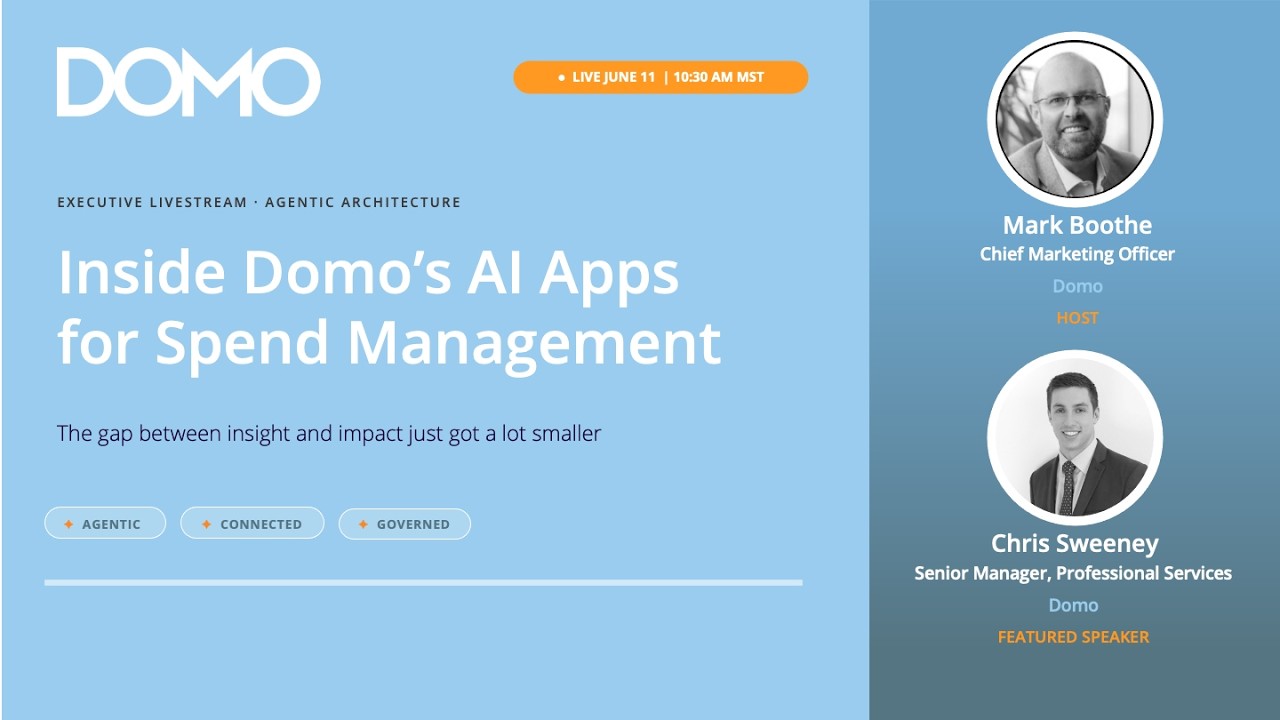
Featured Session: Inside the Procurement Opportunity Studio and Contract Management AI Apps
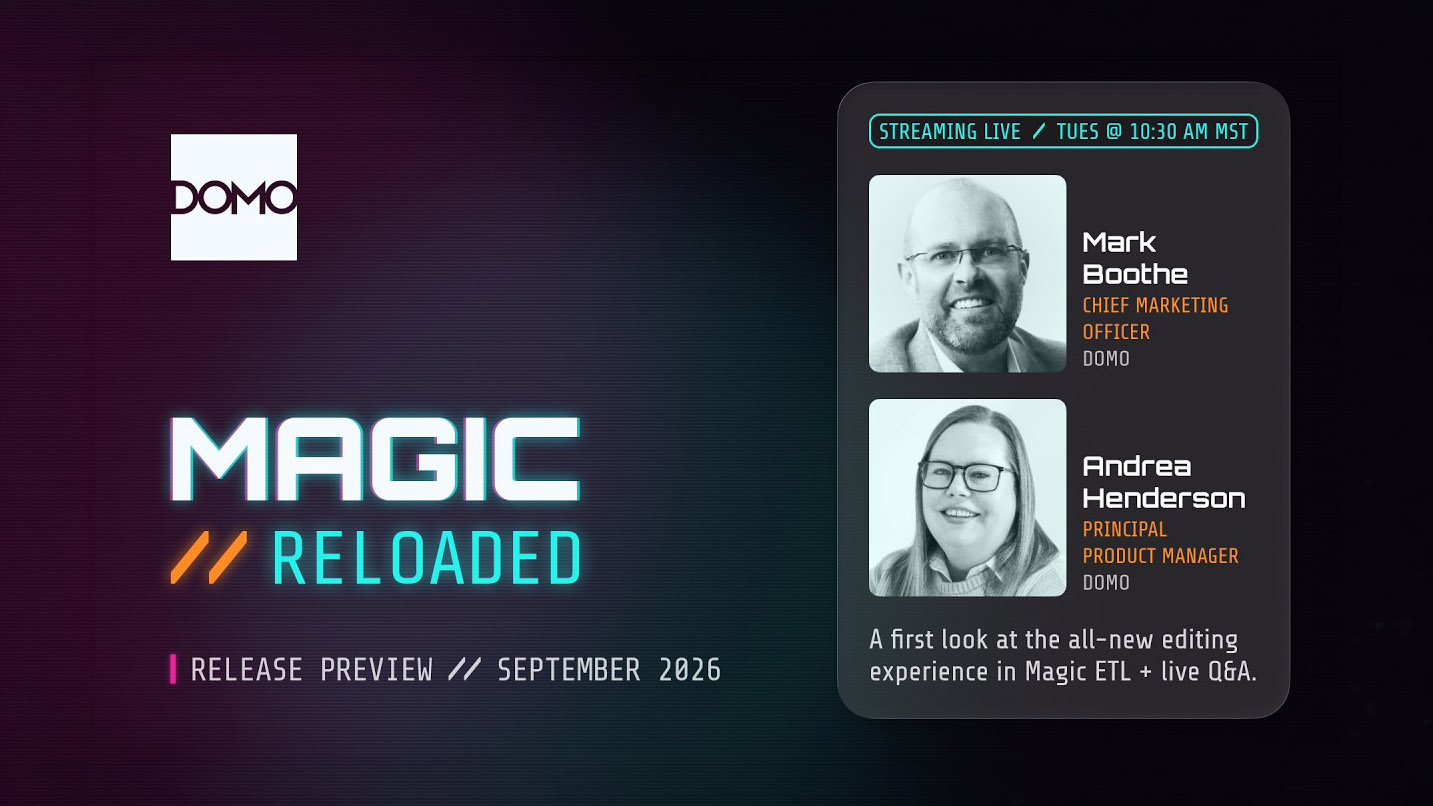
Join Domo CMO Mark Boothe and Chris Sweeney, Domo's EMEA Professional Services and Procurement Lead, as they walk through two AI-powered applications built to do exactly that.
Chris will show how the Procurement Opportunity Studio helps category managers move faster from data to commercial insight, compressing a six-to-eight-week opportunity assessment process down to one to two weeks. Also providing insights that stay live as data updates rather than sitting in a static report.
He'll also walk through the Contract Management App, built for teams managing supplier contracts, or those wanting to layer intelligence on top of an existing contract library. It gives procurement teams instant visibility of risk exposure, upcoming renewals, and gaps that are against best practice, before they become a problem at renewal.
What you will see:
• How these apps analyse and act: Domo AI agents generate spend taxonomies, categorise transactions, extract contract terms with confidence scoring, and produce plain-language risk summaries, with rationale attached at every step.
• Apps that are connected: They work across your existing data and systems, without disruption or additional headcount.
• Governance that is built in: Human oversight is built in throughout. Every recommendation is explainable, every risk flag is evidenced, and every approval stays with the team.
Join us to see how procurement teams are moving from insight to commercial impact faster, supported by AI that helps accelerate insights and identify opportunities driving strategic savings.
Domo transforms the way these companies manage business.