Join the AI + Data Tour for hands-on training, real customer stories, and time with Domo product experts near you.
Register now

Modern organizations run on data that’s constantly changing. Customer records are updated, transactions are created and modified, inventory levels fluctuate, and operational systems evolve minute by minute.
For analytics, reporting, and downstream applications to stay relevant, they need timely access to those changes, not yesterday’s snapshot. This is where change data capture (CDC) comes in.
When Oracle databases sit at the heart of your operational stack, Oracle change data capture becomes a critical capability. Oracle CDC enables teams to identify and move only the data that’s changed in an Oracle database, instead of repeatedly extracting entire tables. The result is faster data movement, reduced load on production systems, and near real-time insights for analytics, data science, and operational use cases.
This article is designed as a high‑level guide to Oracle CDC. It explains what CDC is, why it matters, how Oracle CDC works conceptually, and the common approaches organizations use to implement it. You’ll get a clear mental model of Oracle CDC so you can make informed architectural and tooling decisions.
Change data capture is a pattern and set of techniques used to identify, track, and deliver changes made to data in a source system. Instead of copying all data every time an update is needed, CDC focuses on incremental changes, such as:
In practice, CDC answers a simple question: What’s changed since the last time I looked?
Traditional batch-based data integration often relies on full table extracts or time-based queries. While these methods can work, they come with tradeoffs:
CDC addresses these challenges by making data movement incremental, efficient, and continuous.
Oracle databases are widely used for mission-critical workloads across industries such as finance, healthcare, retail, manufacturing, and government. These systems are optimized for transactional integrity and reliability, not for heavy analytical workloads or frequent full-table scans.
By capturing changes rather than re-querying entire tables, CDC minimizes locking, scanning, and resource contention on operational databases. This is especially important for high-throughput Oracle systems that can’t afford performance degradation.
Business users increasingly expect dashboards and reports to reflect what’s happening now, not hours or days ago. Oracle CDC supports low-latency pipelines that keep analytics platforms up to date.
As data volumes grow, full refresh approaches become slower and more expensive. CDC scales more gracefully because the volume of change data is typically much smaller than the full data set.
Oracle CDC is a foundational capability for:
Without CDC, many of these architectures rely on compromises that limit timeliness or increase complexity.
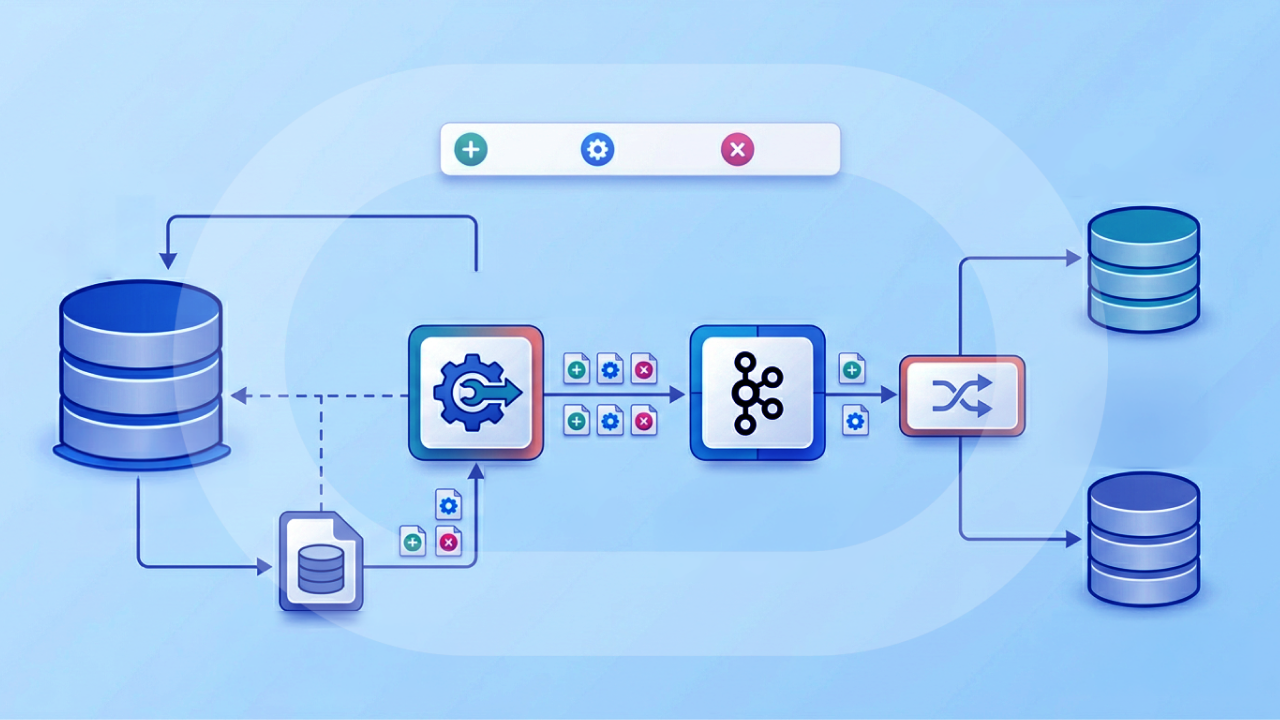
Although implementation details vary, most Oracle CDC solutions follow a similar high-level architecture.
The Oracle database is the system of record. It contains transactional tables that are continuously changing as applications insert, update, and delete data.
This layer is responsible for identifying what has changed. Depending on the CDC approach, it might:
Once changes are detected, they’re:
The processed changes are delivered to a target such as:
Finally, downstream tools consume the data for dashboards, alerts, reports, advanced analytics, or operational workflows.
There is no single “right” way to implement Oracle CDC. The best approach depends on factors such as latency requirements, system constraints, team expertise, and budget. Below are the most common high-level approaches.
Log-based CDC reads Oracle’s redo logs (or archived redo logs) to identify data changes. These logs record every committed transaction in the database.
How it works conceptually:
Advantages:
Considerations:
Log-based CDC is often considered the gold standard for high-volume, low-latency use cases, but it requires careful setup and governance.
Trigger-based CDC uses database triggers to capture changes at the time they occur.
How it works conceptually:
Advantages:
Considerations:
Trigger-based CDC is often used for smaller workloads or when log access isn’t feasible.
This approach relies on timestamp or version columns in tables to identify changed records.
How it works conceptually:
Advantages:
Considerations:
This method is common in legacy environments but becomes less reliable as systems grow more complex.
Oracle provides built-in features that can support CDC use cases, depending on edition and version.
At a high level, these features can:
While Oracle-native capabilities can be powerful, they often require deep Oracle expertise and careful licensing consideration.
Before implementing Oracle CDC, it’s important to think through several architectural and operational considerations. These decisions will influence not only how effective your CDC pipeline is today, but how well it scales and adapts over time.
One of the first questions to answer is how quickly downstream systems need to see changes from Oracle.
Clear latency expectations help narrow architectural choices early and prevent over-engineering.
Not all Oracle tables change at the same rate. Some may see thousands of transactions per second, while others change infrequently.
Consider:
High-change environments benefit from incremental, low-impact CDC strategies, while lower volumes may allow simpler approaches.
CDC pipelines should preserve data integrity and ordering. This includes:
Maintaining consistency is especially important when CDC feeds analytical or operational systems that users rely on for decision-making.
Oracle schemas aren’t static. Over time, tables may gain new columns, data types may change, or tables may be deprecated.
Your CDC strategy should account for:
Planning for schema evolution upfront reduces maintenance headaches later.
Failures are inevitable in distributed systems. A good Oracle CDC design includes mechanisms to:
These capabilities are critical for long-running, always-on data pipelines.
Oracle CDC often involves sensitive or regulated data. Key considerations include:
Security should be embedded into CDC design rather than treated as an afterthought.
Oracle CDC rarely exists in isolation. It’s usually part of a broader data integration and analytics ecosystem.
CDC is commonly used to keep analytical stores in sync with operational Oracle databases. Incremental updates reduce load and allow warehouses and lakes to stay current.
By treating database changes as events, Oracle CDC enables real-time processing, alerts, and operational analytics.
When CDC feeds analytics platforms like Domo, business users gain access to fresher data without waiting for nightly batch jobs.
Domo is designed to help organizations connect, prepare, and analyze data at scale, including data sourced from Oracle databases.
In a CDC-driven architecture, Domo can:
Rather than replacing CDC mechanisms, Domo complements them by focusing on turning change data into insight.
While every organization’s Oracle environment is different, several best practices consistently lead to more reliable and maintainable CDC implementations.
Before selecting tools or architectures, define what CDC is meant to enable. Common goals include:
Clear use cases help teams make pragmatic design decisions and avoid unnecessary complexity.
Rather than enabling CDC for every table at once, start small:
A phased rollout builds confidence and surfaces issues early.
Oracle databases often support mission-critical workloads. CDC should be designed to:
Protecting the source system ensures long-term sustainability.
Including consistent metadata such as timestamps, transaction IDs, and operation types makes downstream processing easier. Standardization simplifies:
CDC pipelines require active monitoring. Track metrics such as:
Proactive monitoring helps teams detect and resolve issues before users are impacted.
Treat Oracle CDC as a core data capability, not a one-off integration. Clear documentation and operational processes ensure:
Oracle CDC can deliver significant value, but teams often encounter challenges along the way. Understanding these pitfalls upfront helps avoid costly rework.
CDC is often described as “incremental,” which can make it seem simpler than it is. In reality, CDC introduces complexity around:
Planning for this complexity is essential for long-term success.
Schema evolution is one of the most common failure points. Pipelines that assume static schemas can break silently when changes occur, leading to data quality issues.
Poorly designed CDC implementations can still strain Oracle systems, especially when:
Protecting the source system should always be a priority.
CDC pipelines require ongoing attention. Without monitoring and governance, small issues can compound into major data inconsistencies.
When business users expect real-time data but the CDC pipeline is designed for batch updates, dissatisfaction follows. Aligning expectations across technical and business teams is critical.
For teams new to Oracle CDC, a structured, incremental approach reduces risk and accelerates learning.
Start by documenting:
This assessment forms the foundation for architectural decisions.
Not all data needs CDC immediately. Identify:
Prioritization ensures early wins.
Select an approach that aligns with your requirements, Oracle environment, and team expertise. Balance performance, complexity, and maintainability.
Run a pilot to validate:
Use pilot results to refine configurations and processes.
Once validated, connect CDC pipelines to analytics platforms such as Domo to deliver timely insights to end users.
Expand CDC coverage gradually, continuously optimizing for performance, reliability, and governance as data needs evolve.
Oracle change data capture is a foundational capability for organizations that want timely, scalable access to operational data. By focusing on incremental change rather than full refreshes, CDC enables modern analytics, real-time insights, and more efficient data architectures.
When paired with an analytics platform like Domo, Oracle CDC becomes even more powerful, turning raw database changes into actionable intelligence that business users trust and act on.
If you’re exploring Oracle CDC as part of a broader analytics or data modernization initiative, Domo is ready to help you make the most of it. With powerful data integration, real-time analytics, and self-service dashboards, Domo turns continuously updated Oracle data into insights that drive smarter decisions.
Learn how Domo supports your Oracle data strategy and help you move from change data to real-time business impact.