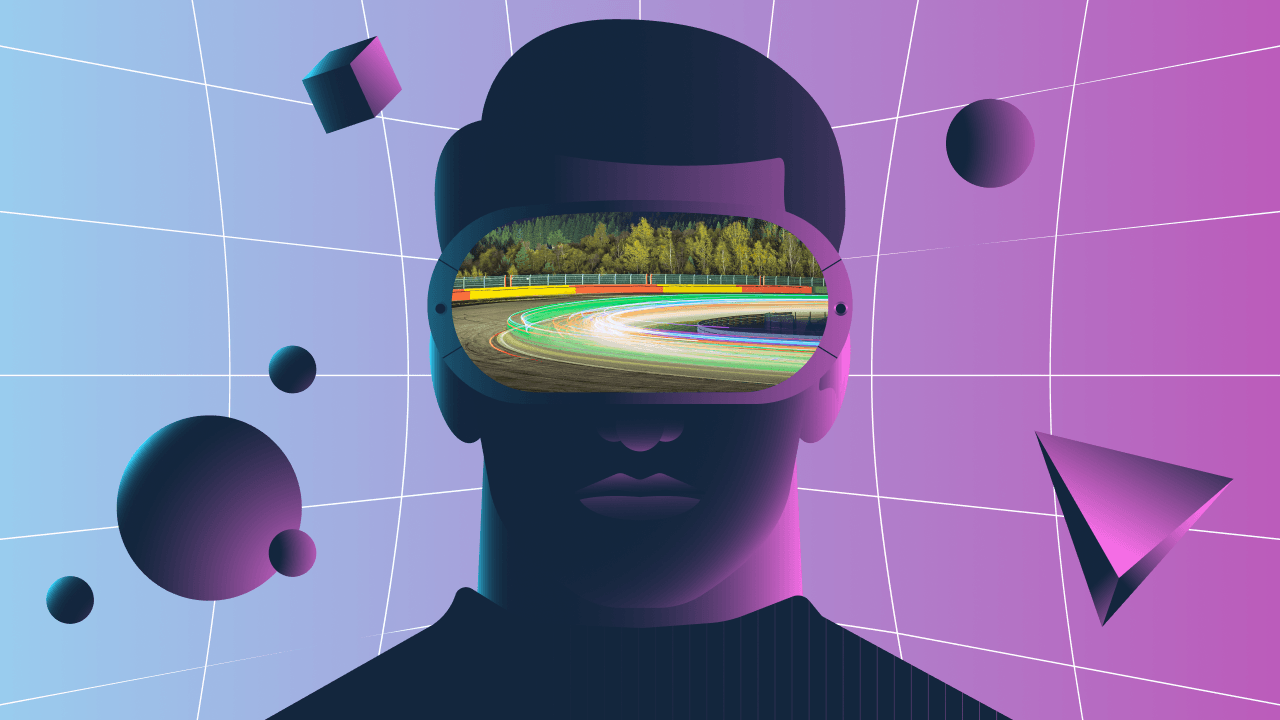
At Domopalooza 2026, our attendees had the chance to step into a Formula 1 racing simulator and see how their performance stacked up in real time.
Throughout the event, a live leaderboard tracked lap times as participants rotated through three simulators. As more people took their turn, the fastest times rose to the top, setting up a final race on the Main Stage.
For Domo, the simulators provided a memorable way to bring our partnership with Formula 1 driver Alex Albon to life and offered a hands-on experience of how data shapes performance on the track.
How the competition unfolded
The format was simple. Participants took turns on the simulators, and each lap appeared on a live leaderboard. As laps accumulated, the rankings shifted, and the top performers began to separate from the pack.
The two participants with the fastest times advanced to a final race on the Main Stage in front of a live audience. Rick Walter, director of application development at fashion retailer AKIRA, finished first.
But, in the end, both finalists were awarded tickets to join Domo at the Miami Grand Prix and meet Alex Albon himself.
Why the simulators fit with Domopalooza
Domopalooza is Domo’s annual conference, where customers, partners, and data leaders come together to explore how data supports real decisions.
That includes seeing how data shows up outside of dashboards.
This year’s simulator experience fit naturally with that idea. Participants could instantly experience how their decisions affected their results. Where they improved. Where they fell short. And how quickly the standings changed.
It’s all part of what makes Domo’s partnership with Alex Albon and Williams Racing such a natural fit. It’s built on a shared principle: Better data leads to better decisions. The simulator experience, sponsored in partnership with FanCapital, gave attendees the chance to experience that principle in action.
What the experience showed about F1 performance
The simulators captured more than lap times. They showed how quickly a participant reacted, how consistently they navigated the track, and where small gains or losses occurred.
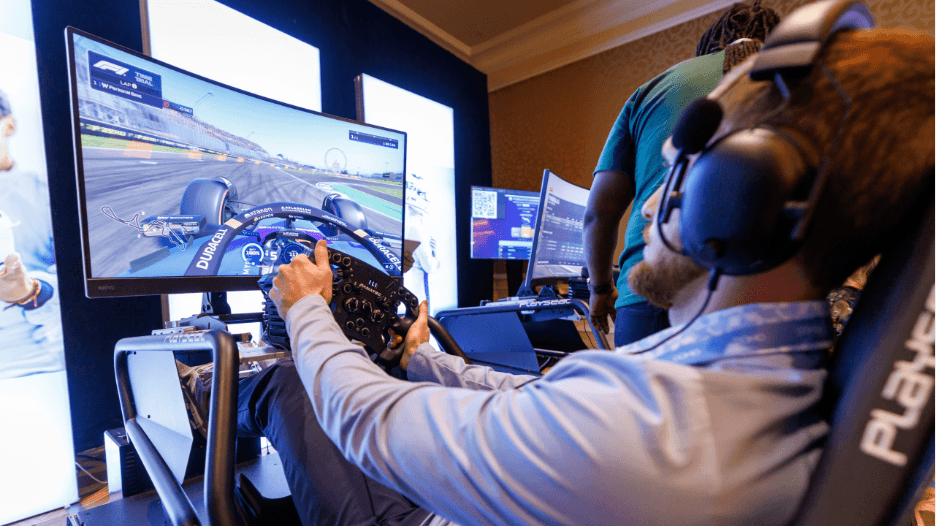
In Formula 1, this type of data is central to how teams prepare. Ahead of race weekends, drivers like Alex Albon spend time in simulators to learn circuits, test different scenarios, and refine their performance based on data.
At Domopalooza, our guests got a glimpse of what this looks like. Changes in performance showed up immediately, and small improvements had a visible impact on rankings.
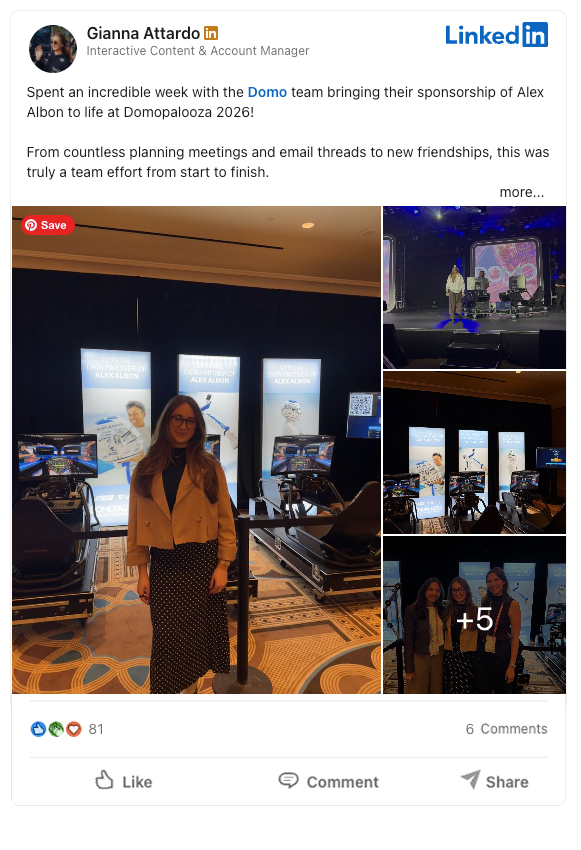
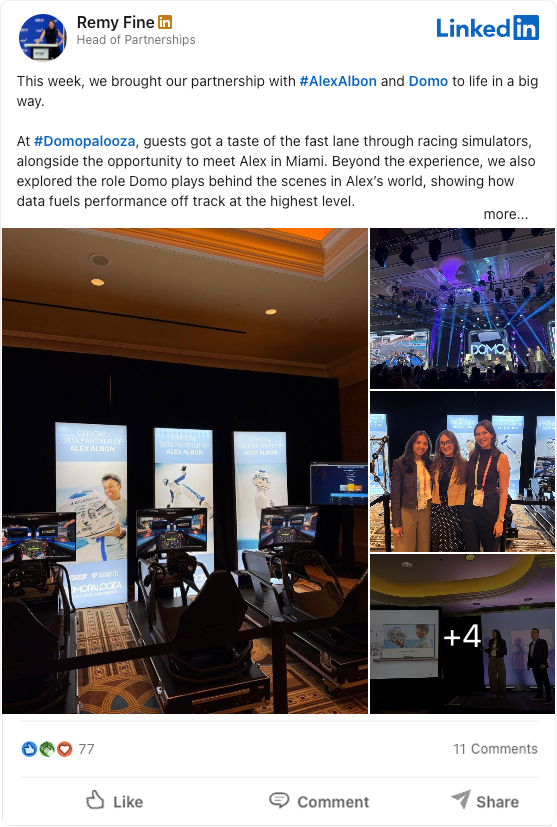
Here’s how the experience was captured across the event (click the images to see the full posts):

From the simulator to the season
The simulator reflected a single moment, but the same types of data shape every race across the Formula 1 season, influencing how drivers and teams prepare and perform.
In 2026, follow along with our coverage of Alex Albon and Formula 1, including the F1 season 1 leaderboard.