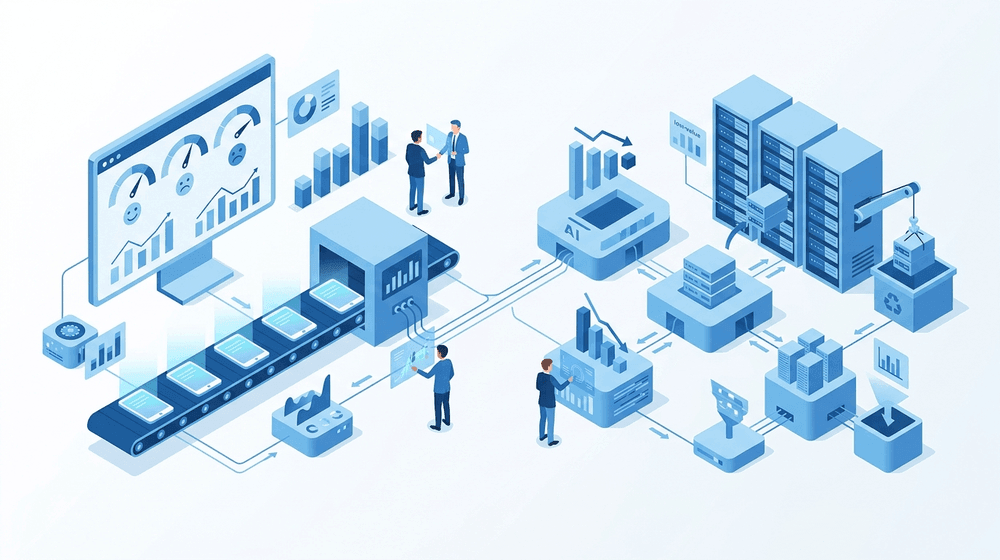
The support queue was growing, the platform bill was climbing, and nobody could explain why either number was moving in the wrong direction. Hundreds of tickets arrived each week with no systematic way to extract patterns. Meanwhile, datasets accumulated across the environment like unused furniture, each consuming credits whether it delivered value or not.
A capital management firm encountered this dual challenge at scale. Their support operation generated high ticket volume, but trends in customer frustration and recurring complaints were invisible because nobody had bandwidth to synthesize patterns manually. Simultaneously, the data environment had grown organically over years, accumulating datasets that consumed credits without clear justification. Without automated analysis, the team was flying blind on sentiment and hemorrhaging credits on data nobody accessed.
Benefits
This agent addresses two costly blind spots in a single deployment: unanalyzed customer sentiment and unmanaged resource consumption.
- Automated sentiment intelligence: Every support ticket is analyzed for emotional tone, urgency, and topic classification, surfacing patterns that would require a dedicated analyst team to identify manually
- Proactive cost management: Credit consumption is monitored against actual business value, identifying datasets consuming resources disproportionate to usage and flagging them for retirement
- Trend detection at scale: Sentiment trends reveal emerging product issues and satisfaction shifts weeks before they surface through traditional feedback channels
- Resource reallocation precision: Quantifying which datasets deliver value enables retirement decisions based on evidence rather than guesswork or institutional inertia
- Unified operational visibility: Customer experience and resource efficiency metrics in a single interface give leadership a holistic view without cross-referencing disconnected reports
Problem Addressed
Organizations at scale face paired blind spots that grow more expensive over time. Support tickets contain rich signal about customer experiences and product shortfalls, but extracting it requires reading every ticket and tracking sentiment patterns. At volume, this is impractical. Tickets get resolved individually, but aggregate intelligence is lost.
The second blind spot is resource consumption. Data platforms accumulate datasets over years as teams create them for projects and one-time analyses. Many continue consuming credits long after their purpose is fulfilled. Without systematic auditing, cost grows invisibly. Both problems share a root cause: absent automated analysis at scale. Manual approaches require dedicated headcount and still produce incomplete results.
What the Agent Does
The agent operates as a dual-function intelligence system, analyzing customer sentiment and platform resource efficiency in parallel:
- Ticket sentiment classification: NLP models classify emotional tone on a granular spectrum, detecting frustration intensity, urgency signals, and satisfaction indicators beyond simple positive/negative binaries
- Topic extraction and clustering: AI identifies specific product features and service areas referenced in tickets, clustering related issues to reveal which areas generate the most negative sentiment
- Trend monitoring and alerting: Sentiment scores tracked over time with anomaly detection flag sudden shifts, enabling investigation before complaints become widespread
- Dataset value scoring: Every dataset is scored against query frequency, downstream dependencies, last access date, and cost, producing a clear value-to-cost ratio
- Retirement recommendations: Low-value datasets are surfaced with impact analysis on downstream reports and processes before recommending removal
Standout Features
- Dual-mode architecture: A single deployment addresses two distinct challenges through shared AI infrastructure, reducing overhead versus deploying separate sentiment and optimization tools
- Granular sentiment modeling: The NLP pipeline distinguishes between mild inconvenience and acute frustration, between routine inquiries and escalation-worthy situations, enabling proportional response
- Cost attribution at the dataset level: Credit consumption mapped to individual datasets replaces opaque aggregate billing, making specific cost drivers visible
- Automated impact analysis: Before recommending retirement, the agent traces all downstream dependencies to ensure decisions do not break active workflows
- Combined dashboard: Sentiment trends and efficiency metrics in one interface enable correlation of customer experience quality with operational spending patterns
Who This Agent Is For
This agent serves organizations needing systematic intelligence from two data-rich domains typically analyzed manually or not at all.
- Support operations managers extracting patterns from high-volume ticket queues without dedicated analysts
- Data governance teams managing platform consumption who lack automated tools to identify which datasets justify their cost
- Finance leaders controlling rising platform costs who need granular spend visibility
Ideal for: Support operations directors, data governance managers, platform administrators, and finance teams where ticket volume and dataset proliferation have outgrown manual management.
