Thousands of customer reviews arrive every week. Traditional sentiment tools label them positive or negative. But knowing a review is negative does not tell anyone what to fix or who should fix it.
The Sentiment Analysis AI Agent was built for organizations drowning in customer feedback that existing tools reduce to a single score. A national restaurant chain with hundreds of locations faced this exact limitation. Their review volume had grown to the point where manual reading was impossible, and their existing sentiment tools only told them what they already knew: some customers were unhappy. What they needed was specificity. Which locations had recurring complaints about wait times versus food quality versus staff interactions? Which complaints represented systemic issues versus one-off incidents? And most importantly, who on the operations side should receive which insights to actually drive resolution?
Benefits
This agent transforms raw customer feedback from a lagging indicator into an operational early warning system that drives measurable improvements across locations, products, and service touchpoints.
- Specific pain point identification: Instead of a sentiment score that tells you customers are unhappy, the agent isolates exactly what they are unhappy about, distinguishing between wait time complaints, product quality issues, staff interaction problems, and pricing concerns within the same batch of reviews
- Automated team routing: Each identified pain point is matched to the team or role best equipped to address it, so operations leaders see facility issues, product teams see quality complaints, and training managers see service interaction patterns without anyone manually triaging feedback
- Trend detection across locations: The agent identifies when the same complaint type surfaces across multiple locations or geographies, distinguishing systemic problems that require corporate-level intervention from localized issues that individual managers can resolve
- Resolution recommendations: Beyond identifying what is wrong, the agent generates specific, actionable recommendations based on the complaint patterns it detects, giving teams a starting point for remediation rather than just a problem statement
- Real-time operational awareness: Teams receive insights as review data flows in rather than waiting for monthly or quarterly analysis cycles, enabling faster response to emerging issues before they compound into reputation damage
- Reduced analytical overhead: Analysts previously spending hours reading and categorizing reviews can redirect their time to strategic work, as the agent handles the extraction, classification, and routing that consumed the majority of their review analysis bandwidth
Problem Addressed
The gap between collecting customer feedback and acting on it has widened as review volumes have grown. Organizations with hundreds of locations, thousands of products, or millions of customer interactions generate more qualitative feedback than any human team can process. Sentiment scoring tools were the first attempt to bridge this gap, but they introduced a different problem: oversimplification. Knowing that 34% of reviews are negative this quarter compared to 28% last quarter tells leadership that something changed, but it does not tell them what changed, where it changed, or what to do about it.
The operational cost of this gap is significant. When feedback sits unanalyzed or is reduced to scores that lack specificity, the same complaints repeat week after week. Locations that could have corrected a training issue in days continue receiving the same negative reviews for months. Product defects that customers describe in precise detail go unaddressed because the feedback never reaches the engineering team in a format they can act on. The problem is not a lack of customer voice. It is a lack of infrastructure to translate that voice into specific, routed, actionable intelligence at the speed the business requires.
What the Agent Does
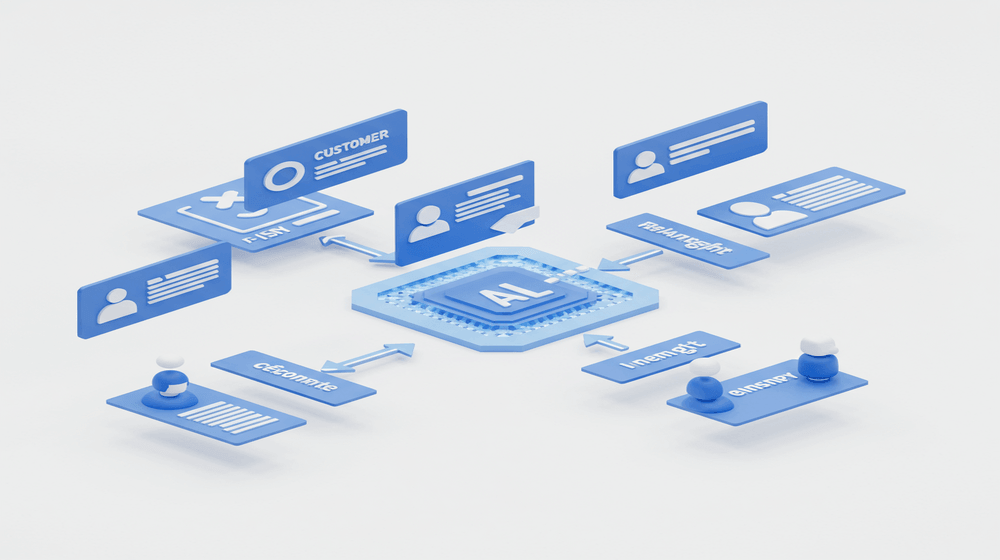
The agent operates as a full-cycle feedback intelligence pipeline, ingesting raw customer reviews and producing categorized, routed, and recommendation-enriched insights ready for team action:
- Multi-source review ingestion: Connects to review platforms, survey systems, support tickets, and social channels to aggregate customer feedback from every source into a unified analysis stream
- Granular complaint extraction: Applies natural language understanding to identify specific complaint topics within each review, separating a single review that mentions both slow service and cold food into two distinct, trackable issues
- Pattern clustering and severity scoring: Groups similar complaints across the review corpus and scores each cluster by frequency, recency, and sentiment intensity to prioritize the issues causing the most customer impact
- Intelligent team routing: Maps each complaint category to the appropriate department, role, or location manager using configurable routing rules, ensuring insights reach decision-makers without manual triage
- Actionable recommendation generation: Produces specific remediation suggestions for each complaint cluster based on the nature of the feedback, giving teams a concrete starting point rather than just a problem label
- Trend monitoring and alerting: Tracks complaint patterns over time and triggers alerts when new issues emerge, existing issues accelerate, or previously resolved problems resurface across the organization
Standout Features
- Beyond-sentiment specificity engine: While conventional tools stop at positive, negative, or neutral classification, this agent identifies the exact noun-verb combinations that define each complaint, turning vague dissatisfaction into addressable operational issues
- Cross-location pattern recognition: Automatically detects when identical complaint patterns appear across geographically dispersed locations, distinguishing between a local manager problem and a systemic corporate issue that requires enterprise-level intervention
- Dynamic routing intelligence: Learns from organizational structure and previous resolution patterns to route insights to the person or team most likely to act on them, adapting as team responsibilities shift
- Resolution tracking feedback loop: Monitors whether routed recommendations lead to measurable complaint reduction, creating a closed-loop system that validates which interventions actually improve customer sentiment over time
Who This Agent Is For
This agent is built for organizations where the volume and variety of customer feedback have outgrown the capacity of manual analysis and the usefulness of basic sentiment scoring.
- Customer experience teams managing feedback across dozens or hundreds of locations who need complaint-level specificity rather than aggregate sentiment trends
- Operations leaders responsible for service quality across distributed teams who need to know exactly which issues to address at which locations
- Product managers tracking customer reception of new offerings who need to separate product complaints from service complaints within the same review streams
- Quality assurance teams that need early detection of recurring defects or service failures before they become widespread reputation issues
- Marketing teams monitoring brand perception who need granular understanding of what drives negative sentiment rather than just tracking its trajectory
Ideal for: Restaurant chains, retail networks, hospitality groups, healthcare systems, and any multi-location business where customer feedback volume demands automated extraction, classification, and routing to convert reviews into operational improvements.
