Benefits
This agent system transforms a manual, document-heavy regulatory reporting process into an automated, interactive, and dramatically more efficient delivery model.
- Eliminated manual compilation: Regulatory appendix reports that previously required weeks of manual assembly from multiple data sources are now generated automatically from live program data
- Dramatically reduced file sizes: Static documents that ballooned to over 100MB are replaced with interactive tables that present the same information in a fraction of the storage footprint, making distribution practical rather than painful
- Interactive data exploration: Regulators and program administrators can filter, sort, and drill into report data interactively rather than scrolling through hundreds of static pages searching for specific records
- Accelerated development cycles: The multi-agent sprint workflow compresses application development timelines by coordinating specialized AI agents across project management, architecture, coding, and quality assurance simultaneously
- Living reports: Reports reflect current program data rather than point-in-time snapshots frozen in static documents, ensuring regulatory submissions contain the most current information available
- Reproducible quality: The agentic development process produces consistent, tested code across all seventeen report types, eliminating the quality variation that comes from different developers building similar reports independently
Problem Addressed
A national compliance technology provider operates a state-level environmental inspection program that requires seventeen distinct regulatory appendix reports to be compiled and submitted on a regular basis. Each report aggregates program data across different dimensions: inspection volumes, compliance rates, equipment certification status, failure patterns, and remediation tracking.
Historically, these reports were compiled manually. Analysts pulled data from multiple systems, formatted it into prescribed layouts, and assembled the results into massive static documents. A single reporting cycle could produce documents exceeding 100MB. These files were difficult to distribute, impossible to search interactively, and immediately outdated the moment they were generated. The compilation process consumed significant analyst time and introduced the risk of manual errors in data aggregation. The organization needed a way to produce all seventeen reports from live data, in an interactive format, without the manual assembly bottleneck.
What the Agent Does
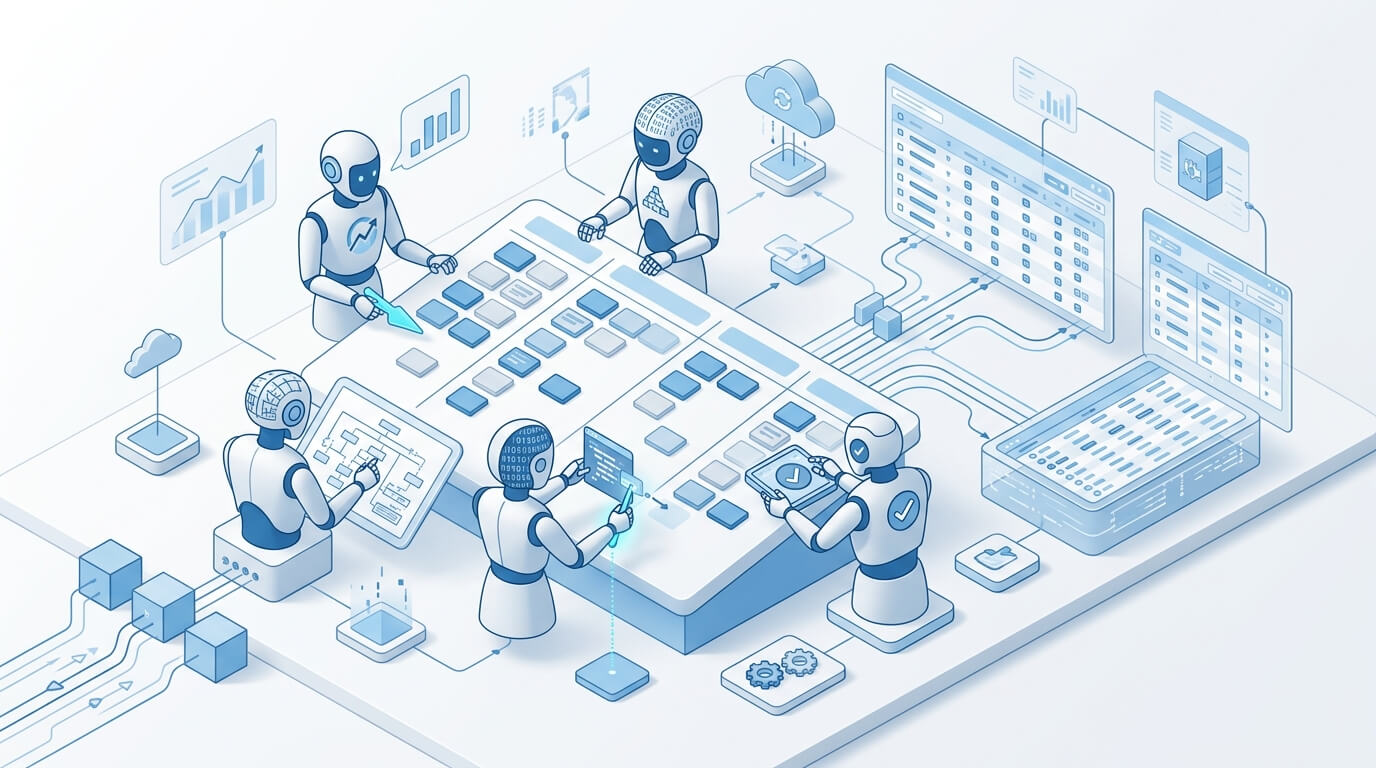
A coordinated set of specialized AI agents collaborates across defined roles to design and build interactive report applications through a structured sprint workflow:
- Project management agent: Decomposes each report requirement into development tasks, defines acceptance criteria, sequences work across sprints, and tracks progress against delivery timelines
- Architecture agent: Analyzes report data requirements and designs the application structure, defining data models, API endpoints, component hierarchies, and rendering strategies for each report type
- Development agent: Generates production-grade application code that connects to live program data sources, renders interactive tables with filtering and sorting capabilities, and supports PDF export for formal submission requirements
- Quality assurance agent: Reviews generated code against acceptance criteria, validates data accuracy by comparing rendered outputs against known reference values, and identifies edge cases in data formatting or volume handling
- Sprint coordination: The agents operate in defined sprint cycles, with each sprint targeting a subset of the seventeen reports, allowing progressive delivery and refinement based on stakeholder feedback
- Integration and deployment: Completed report applications are integrated into the program's operational platform, connecting to live data pipelines that ensure reports always reflect current program status
Standout Features
- Multi-agent collaboration model: Rather than a single AI generating code in isolation, four specialized agents with distinct roles work in coordination, mirroring the structure of a human development team with built-in review and quality gates
- Sprint-based delivery: The agentic workflow follows sprint methodology, producing working report applications incrementally rather than attempting all seventeen reports simultaneously, enabling early stakeholder feedback and course correction
- Live data connectivity: Reports connect directly to operational data sources rather than static exports, ensuring regulatory submissions reflect current program status without manual data refresh cycles
- Interactive PDF replacement: Static 100MB+ documents are replaced with interactive web applications that support filtering, sorting, and drill-down while maintaining PDF export capability for formal filing requirements
- Reproducible development process: The agentic development pipeline can be re-executed when report requirements change, producing updated applications without manual redevelopment of each report from scratch
Who This Agent Is For
This agent system is built for organizations that produce complex regulatory reports from operational data and need to modernize from static document compilation to interactive, data-driven reporting.
- Compliance technology providers managing regulatory reporting obligations across state or federal programs
- Program administrators who need interactive access to compliance data rather than static document archives
- Regulatory affairs teams producing periodic appendix reports from large operational datasets
- Development teams looking to accelerate report application delivery through AI-assisted sprint workflows
- Public sector organizations seeking to transform document-heavy reporting processes into modern, interactive data applications
Ideal for: Compliance officers, regulatory program managers, public sector technology providers, environmental agencies, and any organization where regulatory reporting involves compiling large volumes of operational data into prescribed formats.
