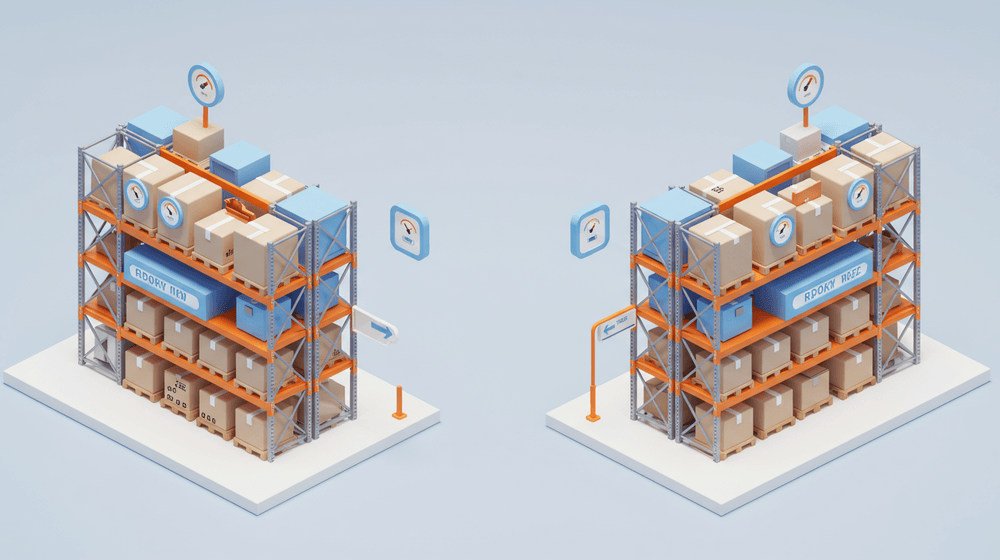
Never stockout. Never overorder. Always right-sized.
If you have ever walked into a Monday morning planning meeting and learned that a key SKU ran out over the weekend, you know the feeling. The scramble to expedite, the lost sales, the customer apologies. And the worst part is that the data was there — the depletion trend was visible weeks ago if anyone had been watching. The Inventory Reorder Agent watches for you. Built natively in Domo with Magic ETL, Workflows, Agent Catalyst, and AppDB, it connects to your real-time inventory data, applies demand forecasting models to every SKU and location, and generates purchase orders or reorder alerts before stock levels hit critical thresholds. The reorder points are not static numbers set once a year — they adapt continuously based on actual consumption patterns, seasonal trends, and lead time variability.
Benefits
This agent replaces reactive inventory management with a predictive system that keeps stock levels optimized across every location without manual monitoring.
- Predictive reorder timing: Purchase orders trigger based on forecasted depletion curves rather than static min/max thresholds, accounting for demand velocity changes that fixed reorder points miss entirely
- Stockout prevention: Continuous monitoring across all SKUs and locations means depletion warnings surface days or weeks before a stockout, giving procurement enough lead time to act without expediting
- Dynamic safety stock: Safety stock levels adjust automatically based on demand variability and supplier lead time reliability — tighter for stable items, wider for volatile ones
- Auto-generated purchase orders: When reorder thresholds are crossed, the agent generates purchase orders with calculated optimal quantities factoring in MOQs, price breaks, and warehouse capacity
- Multi-location visibility: A single view across all warehouses and stores shows which locations need replenishment, enabling transfer recommendations between overstocked and understocked sites
- Reduced carrying costs: By ordering the right quantity at the right time instead of over-ordering for safety, total inventory carrying costs decrease while service levels improve
Problem Addressed
Most inventory reorder systems operate on fixed thresholds — when stock hits a predetermined level, a reorder is triggered. This sounds reasonable until you realize that demand is not fixed. A SKU that sells 100 units per week in summer might sell 30 per week in winter, but the reorder point stays the same year-round. The result is a cycle of stockouts during high-demand periods and overstock during low-demand periods, both of which cost money.
The manual alternative is even worse. Planners review spreadsheets, eyeball trends, and make judgment calls about what to order and when. This works for a small catalog, but at scale — hundreds or thousands of SKUs across multiple locations — human attention cannot keep up. Items slip through the cracks, orders go out late, and the business absorbs the cost of lost sales and expedited shipping without ever quantifying how much the broken process is costing them.
What the Agent Does
The agent operates as a continuous demand-aware inventory optimization system:
- Real-time stock monitoring: Magic ETL ingests inventory levels across all locations and SKUs, maintaining a live view of current stock, committed orders, and available-to-promise quantities
- Demand forecasting: Applies time-series forecasting to historical consumption data, factoring in seasonality, trends, and recent velocity changes to project when each SKU will hit its reorder threshold
- Dynamic threshold calculation: Reorder points and safety stock levels are recalculated continuously based on current demand patterns and supplier lead time performance — not set annually and forgotten
- Purchase order generation: When projected stock-on-hand crosses the dynamic reorder point, the agent auto-generates a purchase order with optimal quantities factoring in MOQs, price breaks, lead times, and warehouse capacity constraints
- Alert routing: Notifications flow to the appropriate procurement team member based on SKU category, supplier assignment, and urgency level, ensuring the right person acts on the right items
- Transfer recommendations: Before triggering new purchase orders, the agent checks if other locations have excess stock that could be transferred, reducing total inventory investment across the network
Standout Features
- Adaptive forecasting: The demand model continuously recalibrates based on actual consumption, automatically detecting trend shifts and seasonal pattern changes without manual model retraining
- Supplier lead time learning: Tracks actual vs quoted lead times per supplier, adjusting reorder timing based on real delivery performance rather than catalog estimates
- Multi-constraint optimization: Purchase order quantities balance minimum order quantities, volume price breaks, warehouse capacity limits, and cash flow constraints simultaneously
- Exception-first dashboard: Instead of showing every SKU, the interface surfaces only the items that need attention — approaching reorder, stockout risk, excess stock, or supplier delay — so planners focus on what matters
- What-if scenario modeling: Planners can simulate demand changes or supplier disruptions to see how reorder timing and quantities would adjust, enabling proactive planning for known upcoming events
Who This Agent Is For
This agent is built for operations and procurement teams who are tired of discovering stockouts after they happen and overordering to compensate.
- Inventory planners managing hundreds or thousands of SKUs who cannot manually monitor every item every day
- Procurement teams who want purchase orders generated automatically with the right quantities at the right time
- Operations managers responsible for service levels who need confidence that stock will be available when customers order
- Finance teams looking to reduce carrying costs and working capital tied up in excess inventory
- Supply chain directors managing multi-location networks who need transfer-before-purchase intelligence
Ideal for: retailers, distributors, manufacturers, e-commerce companies, food service operators, and any organization where inventory availability directly impacts revenue and customer satisfaction.
