The threat data was already being collected internally. The question was how to turn defensive telemetry into proactive member protection at scale.
A community financial institution supporting thousands of online banking members faced a challenge that many security teams recognize: they had extensive data on the attack methods targeting their systems, but that intelligence stayed locked inside the security operations team. Members, the people most vulnerable to phishing, credential stuffing, and social engineering, received generic security advice that did not reflect the specific threats actually hitting their institution's systems. The Cybersecurity Threat Briefing AI Agent was built to bridge that gap. It ingests the institution's own threat data, identifies the most prevalent attack methods each month, and generates a structured, plain-language email newsletter that transforms internal defensive intelligence into actionable member guidance.
Benefits
This agent converts internal security telemetry into a proactive member service that builds trust while measurably reducing the institution's attack surface through educated member behavior.
- Threat-specific member education: Instead of generic security tips, members receive guidance based on the actual attack methods targeting their institution's systems that month, making every recommendation immediately relevant to their real risk exposure
- Automated monthly production cycle: The newsletter generation process runs autonomously from data analysis through draft production, eliminating the manual effort that previously made regular security communications unsustainable for a small security team
- Proactive trust building: Members perceive the institution as actively protecting them rather than merely reacting to breaches, strengthening the trust relationship that is foundational to community financial institution membership
- Reduced member-side vulnerability: Practical, threat-specific guidance helps members recognize and avoid the exact attack patterns currently in circulation, reducing successful phishing, credential theft, and social engineering incidents
- Security team force multiplication: A team that previously could not justify the hours required for monthly member communications now delivers consistent, high-quality security briefings without diverting resources from core defensive operations
- Regulatory alignment: Regular, documented member security education supports compliance with financial industry regulations that require institutions to demonstrate proactive efforts to protect customer accounts and personal information
Problem Addressed
Financial institutions collect enormous volumes of threat data through firewalls, intrusion detection systems, authentication logs, and fraud monitoring platforms. Security teams analyze this data to harden systems, patch vulnerabilities, and block attack vectors. But the vast majority of successful attacks against consumer banking accounts do not exploit technical vulnerabilities in the institution's infrastructure. They exploit the members themselves. Phishing emails that mimic the institution's login page. Social engineering calls that reference real account details. Credential stuffing attacks using passwords the member reused from a compromised retail site.
The security team knows exactly which attack methods are trending because they see them in the data every day. Members know none of this. They receive the same generic security advice they have seen for years: use strong passwords, do not click suspicious links, enable two-factor authentication. That advice is not wrong, but it is not specific enough to change behavior. When the security team observes a surge in SMS phishing attempts that impersonate package delivery notifications and redirect to credential harvesting pages, that specific, actionable intelligence never reaches the members who are receiving those texts. The data exists to protect members proactively. The missing piece was a system to transform that data into communications automatically, consistently, and at a quality level that members actually read.
What the Agent Does
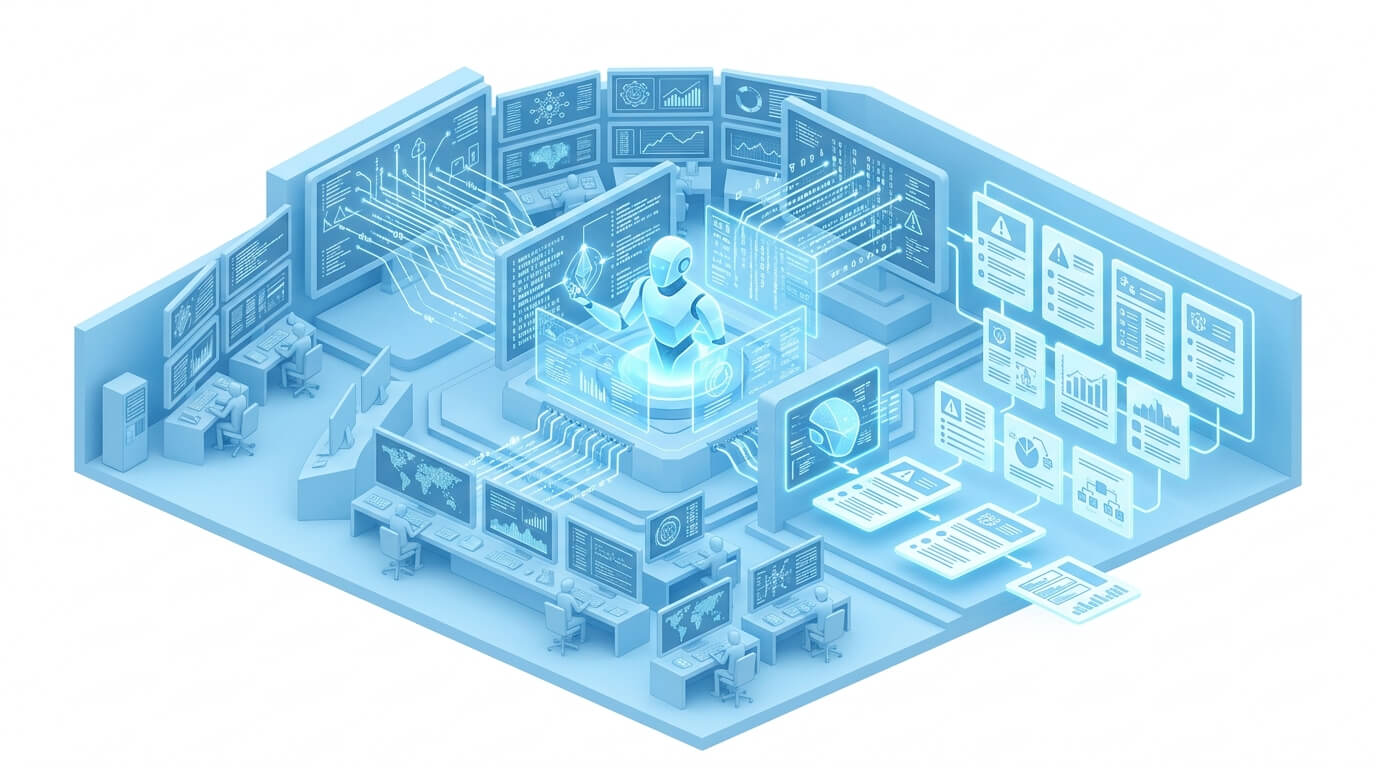
The agent operates as an automated intelligence-to-communication pipeline that transforms raw threat data into structured, member-appropriate security briefings:
- Threat data ingestion: Connects to the institution's security monitoring systems and online banking portal activity logs to collect data on attempted attacks, blocked threats, authentication anomalies, and fraud patterns over the analysis period
- Attack method classification: Categorizes observed threats by attack vector type, including phishing variants, credential attacks, social engineering methods, malware delivery mechanisms, and account takeover techniques, and ranks them by prevalence and member impact potential
- Top threat identification: Selects the three most significant threats for the current period based on a composite score of frequency, success rate, member exposure, and novelty, ensuring the newsletter focuses on the risks that matter most right now
- Plain-language translation: Transforms technical threat descriptions into clear, non-technical explanations that members can understand and act on, including specific examples of what the attack looks like, how to recognize it, and what to do if encountered
- Practical recommendation generation: Produces concrete, step-by-step protective actions for each highlighted threat, calibrated to the technical sophistication of a general consumer audience rather than security professionals
- Newsletter assembly and formatting: Composes the complete email newsletter with consistent branding, structured sections for each threat, and a professional tone that communicates urgency without creating panic
Standout Features
- Real threat data, not hypotheticals: Every newsletter is grounded in the institution's actual threat telemetry from the preceding month, ensuring that the threats discussed are the ones members are genuinely encountering rather than theoretical risks pulled from industry reports
- Workflow-driven automation: The entire pipeline from data analysis through newsletter generation is orchestrated through automated workflows that execute on schedule without requiring security team initiation, review queue placement, or manual data extraction
- Adaptive threat prioritization: The selection algorithm adjusts for threat novelty, so a new attack type that appears for the first time receives elevated priority even at lower volume, while persistent threats that were covered in recent newsletters are deprioritized to avoid repetitive content
- Member-calibrated language: The agent's output is specifically tuned for consumer financial services members, avoiding both the oversimplification that makes security advice feel patronizing and the technical jargon that makes it incomprehensible to non-specialists
Who This Agent Is For
This agent is designed for financial institutions and member-serving organizations that possess internal threat data and want to transform it into a proactive member protection service without adding headcount to the security team.
- Information security teams at community banks and credit unions who lack the staff to produce regular member-facing security communications manually
- Member services and communications teams seeking content that is grounded in real threat data rather than recycled generic security advice
- Compliance officers at financial institutions who need documented evidence of proactive member security education for regulatory examinations
- Chief information security officers looking to extend the value of their threat intelligence investment beyond internal defensive operations into member-facing protection
- Any financial institution where phishing, social engineering, and credential attacks represent a significant and growing source of member account compromise
Ideal for: CISOs, security operations leads, member communications managers, compliance officers, and any community financial institution that recognizes member education as a critical layer of defense and needs an automated way to deliver it consistently.
