
Benefits
Strategy teams gain a continuously updated competitive intelligence system that replaces manual news monitoring with automated analysis, delivering categorized insights and trend visibility that would take weeks to assemble by hand.
- Automated competitive monitoring: External news sources, press releases, industry publications, and document feeds are ingested automatically, ensuring the intelligence pipeline runs continuously without requiring analysts to manually search for and collect content
- AI-driven categorization and tagging: Every ingested article or document is analyzed and categorized by competitor, topic, sentiment, and strategic relevance, creating an organized intelligence archive that is immediately navigable rather than a raw dump of articles
- Trend visibility across time: The agent tracks competitive activity patterns over weeks and months, surfacing trends such as increased hiring in a specific function, repeated product messaging shifts, or geographic expansion signals that only become visible when data is aggregated systematically
- Natural-language exploration: Rather than clicking through folders or running keyword searches, users interact with the intelligence archive through a conversational interface, asking questions like what competitors have been saying about a specific capability or what market moves have occurred in a given quarter
- Reduced time-to-insight: What previously required a dedicated analyst spending hours per week compiling competitive briefings is now available on-demand. Any team member can access current competitive intelligence within minutes without specialized research skills
- Centralized competitive knowledge: All competitive intelligence lives in a single, searchable system rather than scattered across email threads, shared drives, and individual analysts' notes, ensuring organizational knowledge survives team transitions
Problem Addressed
Competitive intelligence gathering at most organizations is a manual, fragmented process. Strategy teams, product managers, and sales leaders each monitor competitors through their own informal channels: reading industry publications, setting up news alerts, attending conferences, and relying on field reports from sales interactions. The resulting intelligence is scattered across email inboxes, presentation decks, and individual memory. There is no centralized system that continuously monitors the competitive landscape, categorizes what it finds, and makes the accumulated intelligence explorable.
This fragmentation means that when a strategic question arises, such as what a specific competitor has been investing in recently or how the competitive landscape in a particular market segment has shifted, answering it requires starting from scratch. Analysts must re-gather information, re-read articles, and re-synthesize findings. Patterns that would be obvious if all competitive signals were aggregated in one place go unnoticed because the signals are distributed across dozens of sources and stakeholders. The organization has competitive awareness, but not competitive intelligence.
What the Agent Does
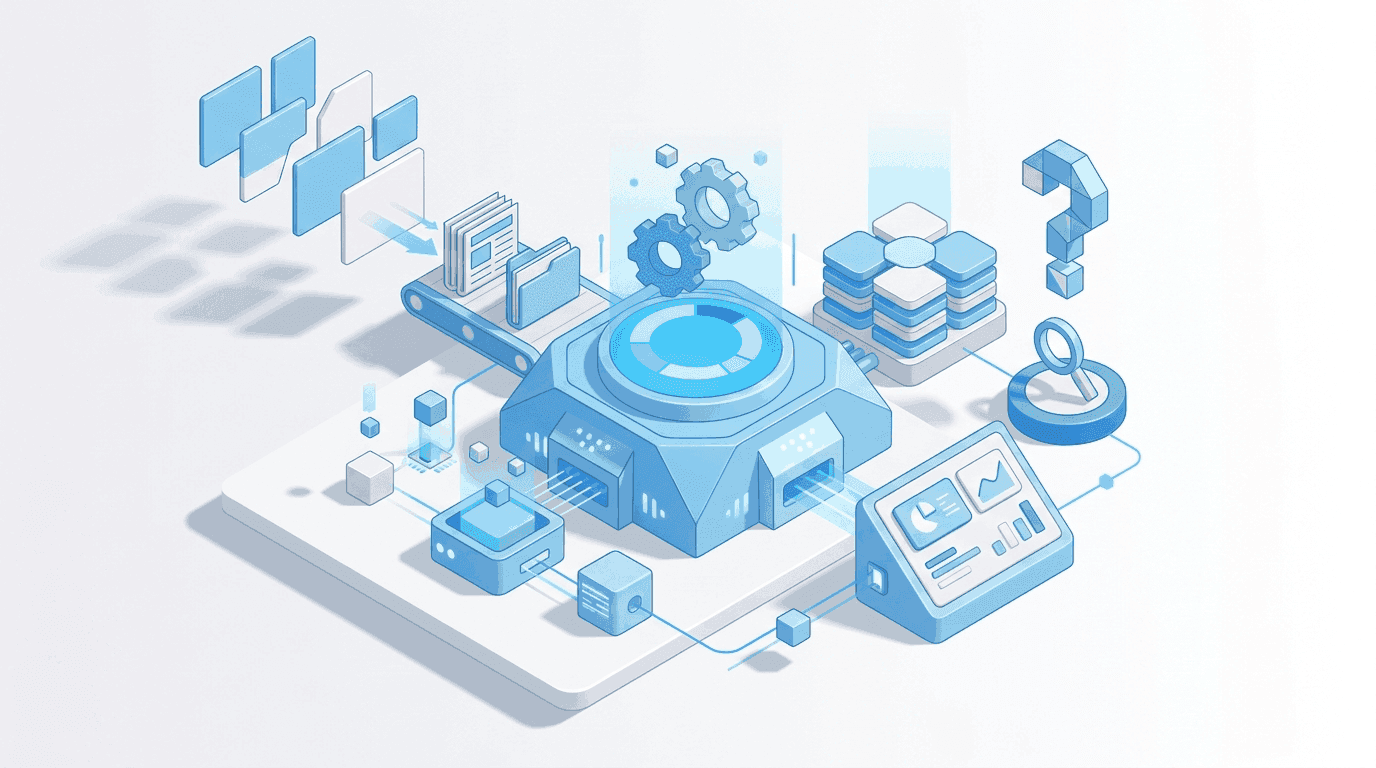
The agent builds and maintains a continuously updated competitive intelligence system through automated ingestion, AI analysis, and retrieval-augmented exploration:
- Multi-source content ingestion: The agent pulls content from configured external news feeds, RSS sources, industry publication APIs, and document upload channels, creating a steady inflow of competitive content without manual collection
- AI content analysis: Each ingested item passes through an AI analysis pipeline that identifies mentioned competitors, extracts key facts and claims, assesses sentiment and strategic significance, and generates structured metadata for categorization
- Automated categorization: Analyzed content is tagged along multiple dimensions including competitor name, topic category (product, pricing, partnerships, hiring, funding, regulatory), geographic relevance, and estimated strategic impact
- RAG index maintenance: All analyzed content is indexed in a retrieval-augmented generation system that enables semantic search and question answering across the entire intelligence archive, not just keyword matching
- Trend computation: The agent continuously computes trend metrics across the categorized archive, tracking mention frequency, topic distribution, sentiment shifts, and activity patterns per competitor over configurable time windows
- Interactive exploration interface: Users access the intelligence through a conversational interface where they can ask questions, request summaries, compare competitors, explore trends, and drill into specific topics or time periods
Standout Features
- Cross-source synthesis: The agent does not just collect articles in parallel; it synthesizes information across sources, recognizing when multiple articles reference the same underlying event and consolidating them into a unified intelligence item rather than creating duplicates
- Strategic signal scoring: Not all competitive news is equally important. The agent scores each item's strategic relevance based on configurable criteria, ensuring that high-impact signals like acquisition announcements or major product launches rise to the top while routine mentions are filed but not flagged
- Temporal trend analysis: Users can query the system for trend-based insights, such as tracking how a competitor's messaging has evolved over the past six months or identifying which topics are receiving increasing attention in the competitive landscape
- Executive briefing generation: On demand or on a scheduled basis, the agent produces formatted competitive briefing documents that summarize the most significant developments, emerging trends, and strategic implications from the recent intelligence intake
- Custom alert configuration: Users can configure alerts for specific competitive triggers, such as being notified immediately when a particular competitor announces a partnership in a specific market segment, ensuring critical signals are not buried in the regular intelligence flow
Who This Agent Is For
This agent delivers the most value to organizations that compete in dynamic markets where competitive moves happen frequently and the cost of missing a signal is high.
- Strategy teams responsible for competitive positioning and market analysis who need continuous, organized intelligence rather than periodic manual research efforts
- Competitive intelligence analysts who want to spend their time on analysis and interpretation rather than collection and organization
- Product managers tracking competitor feature releases, pricing changes, and positioning shifts to inform their own product roadmap decisions
- Sales enablement teams maintaining competitive battle cards and needing a reliable source of current competitive intelligence to keep those materials accurate
- Executive leadership teams who need on-demand answers to strategic competitive questions without waiting for a research team to compile a report
Ideal for: Technology companies, financial services firms, pharmaceutical companies, manufacturing enterprises, and any organization operating in markets with active, well-funded competitors whose moves require continuous monitoring.
