Partecipa all'AI + Data Tour per una formazione pratica, storie di clienti reali e incontri con gli esperti di prodotto Domo vicino a te.
Registrati ora
Google recently announced major advancements in conversational analytics across the Google Data Cloud, including general availability in BigQuery. The updates will make it easier for you to explore your business data by asking questions in your natural, everyday language.
If you were to stop someone on the street and ask how to get to the metro station, you don’t need to describe the possible routes in a sequence of coordinates. You just ask, “What’s the fastest way to get there?”
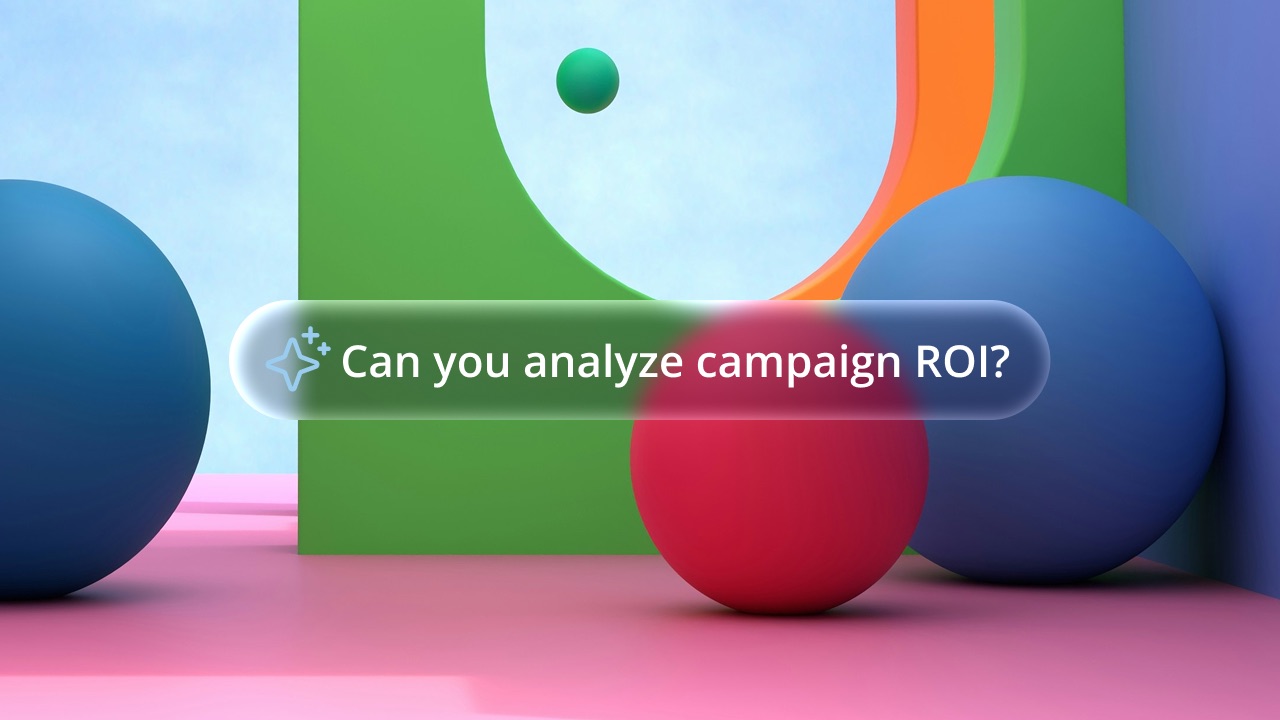
Conversational analytics applies a similar idea to business data. You might ask, “Why did our sales drop last month?” or “Which of our campaigns are generating the most revenue?” without first having to translate the question into the structure of the underlying data.
But there’s still a catch. (Isn’t there always?)
The answer depends on the data that’s available to the system. Within Google Cloud, BigQuery is where much of the analysis takes place. If important customer, financial, or marketing data aren’t connected to your Google Cloud data environment, conversational analytics may have only part of the information required to answer a broader business question.
Consider one of your marketing leaders asking, “How did our ad spend on Meta affect our Salesforce close rates this quarter?”
It’s a pretty straight-forward question. Or at least it should be. But getting the right data to answer it is much more complex when your data is separated in different places. If your marketing data might be in HubSpot, financials in NetSuite, operations in ServiceNow, and sales in Salesforce, then your conversational AI’s capabilities are hampered.
That’s because BigQuery can only work with the parts of the data it has direct access to, and many companies haven’t been able to get all their business data into Google Cloud.
But, the more relevant data your AI can securely access, the more complete context it will have to provide the most comprehensive answers. The easier it becomes to ask business-wide questions, the more valuable it becomes to have the right data easily and securely available.
Domo makes it easier and faster to bring your business data into the Google Cloud environment. Domo’s data integration capabilities extend the Google Cloud environment by connecting and preparing data from sources across the business for use with BigQuery.
That includes access to:
Now, instead of analyzing each individual data source, you can connect more of the business information behind a business question and make it available to the Google Cloud environment to support conversational analytics.
That work also respects how the organization governs its data. Domo can also work with BigQuery’s native permissions through its governance model, helping preserve role-based access as data becomes available across the two environments.
The point is to make sure the data that’s relevant to your business questions is available where the analysis happens.
Let’s return to your marketing leader asking about their ad spend.
If campaign and sales data are both available in BigQuery, the leader can now begin with the question they want answered: how marketing spending relates to closed business. They don’t have to begin by figuring out which systems contain each part of the answer.
The same principle applies to questions that cross finance, operations, sales, marketing, or other parts of a company. Conversational analytics makes those questions easier to ask. Connected data gives the system more of the context required to answer them.
Google Cloud’s latest conversational analytics updates make the interaction with business data more natural. Domo can help make more of the underlying business data available in BigQuery, so that easier conversation is backed by a fuller view of the business.
Learn more about how Domo works with Google Cloud and BigQuery.